

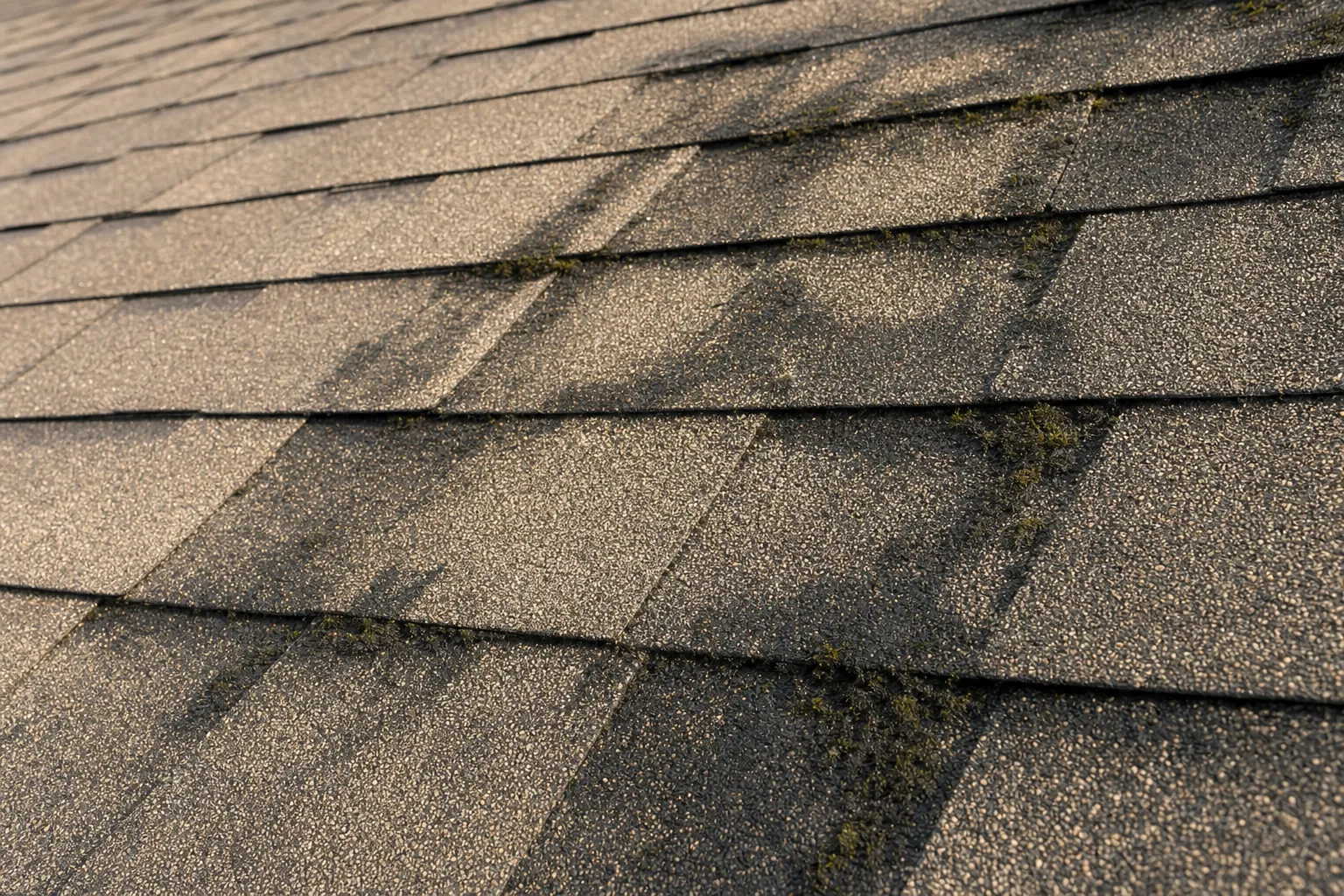
If you've noticed dark streaks, black stains, or green-gray patches spreading across your roof, you're not alone. Algae on roof shingles is one of the most common forms of roof discoloration homeowners encounter in the Tulsa area. While it may look purely cosmetic at first, understanding what causes it and how to address it can save you money and extend your roof's lifespan.
What Causes Algae Growth on Roofs
Algae thrives in damp, shaded environments. Your roof provides the perfect conditions: moisture from rain, morning dew, or inadequate drainage, combined with shade from nearby trees or northern-facing slopes. The algae spores spread through the air and settle on your shingles, where they multiply rapidly in moist conditions.
Oklahoma's humid climate and frequent rain make Tulsa homes especially susceptible to algae buildup. If your roof has overhanging tree branches or sits in a valley that collects water, you're at higher risk. The problem tends to worsen over time if left untreated, with the dark stains becoming darker and more widespread each year.
The Difference Between Algae, Moss, and Mold
Not all roof discoloration is the same. Understanding what's growing on your shingles helps determine the best treatment approach.
Algae appears as black or dark green streaks and is the most common culprit. It feeds on the limestone granules in asphalt shingles and grows in clusters.
Moss looks fuzzy or spongy, typically appears in thicker patches, and grows more slowly than algae. It thrives in consistently moist, shaded areas.
Mold is often slimy and can indicate a moisture problem beneath the surface, potentially leading to more serious roof damage and even interior water infiltration.
While algae itself doesn't immediately damage shingles, it can trap moisture against the roof surface, which accelerates wear and tear. Over time, this moisture retention may contribute to premature shingle deterioration and can eventually lead to the need for professional roof repair.
Why Roof Algae Matters
Beyond appearance, roof algae and discoloration signal moisture accumulation. The algae feeds on granules that protect your shingles from UV damage, so as it spreads, it can weaken the protective layer. This process accelerates shingle degradation and shortens the overall lifespan of your roof.
Additionally, if the discoloration is actually mold rather than algae, you may face health risks. Mold spores can enter your home through the attic or ventilation system, potentially triggering respiratory issues and allergies.
Safe Methods for Removing Algae
There are several approaches to tackling roof algae, ranging from DIY methods to professional solutions.
Soft washing is the safest method for homeowners. Use a low-pressure spray with a mixture of water and mild bleach or a specialized roof cleaner. Never use a high-pressure power washer, which can strip granules and damage shingles. Apply the solution, let it sit for 15 to 20 minutes, then rinse gently.
Copper or zinc strips installed along the roof ridge can prevent algae growth over time. As it rains, the metal oxidizes and creates an environment where algae struggles to thrive.
Improving drainage and ventilation by clearing gutters, trimming overhanging branches, and ensuring proper attic ventilation reduces the moisture that algae loves.
Professional cleaning is the best option if the algae is widespread or if you're uncomfortable working on your roof. Professionals have the right equipment, safety measures, and cleaning agents to remove algae without damaging your shingles.
Prevention Tips for Tulsa Homeowners
Keeping algae from returning requires ongoing attention:
- Keep gutters and downspouts clear of debris so water drains properly
- Trim tree branches hanging over your roof to increase sunlight exposure
- Ensure your attic has proper ventilation to reduce moisture buildup
- Schedule regular roof inspections to catch early signs of discoloration
- Consider zinc or copper strips as a long-term preventative measure
- Address any roof leaks or moisture problems immediately
When to Call a Professional
If algae covers a large portion of your roof, if the discoloration is accompanied by soft spots or visible damage, or if you suspect mold rather than algae, it's time to contact a professional roofing contractor. Trifecta Roofing and Restoration specializes in identifying and addressing roof issues before they become costly problems. Our team can assess whether the discoloration is a surface concern or a sign of deeper moisture and structural issues.
A professional inspection will reveal whether your roof needs cleaning, minor repairs, or more extensive work. Many homeowners are surprised to discover that what looks like simple algae is actually masking underlying damage that requires attention.
Protecting Your Investment
Your roof is one of your home's most important assets. Regular maintenance, including monitoring for algae and discoloration, helps prevent water damage and extends the life of your shingles. By addressing algae early and maintaining good drainage and ventilation, you can keep your roof healthy for years to come.
If you've noticed algae on your roof or suspect roof discoloration in the Tulsa area, don't wait for the problem to worsen. Contact Trifecta Roofing and Restoration for a free inspection. We'll assess the condition of your roof, explain what we find, and recommend the best course of action to protect your home and maintain your property value.