

Your roof works harder than most homeowners realize. Beyond shedding rain and snow, it needs to breathe. Attic ventilation is one of the most overlooked yet critical factors in maintaining a healthy roof and preventing expensive water damage.
When your attic lacks proper airflow, moisture builds up, heat gets trapped, and your roof deteriorates from the inside out. The good news is that improving attic ventilation is a smart investment that protects your entire home and extends the life of your roofing system.
Why Attic Ventilation Matters
Your attic isn't just wasted space. It's part of your home's thermal and moisture management system. Without adequate ventilation, several problems emerge:
- Excessive heat shortens the lifespan of roofing materials and accelerates shingle deterioration
- Moisture accumulation leads to mold growth and wood rot in the roof structure
- Temperature fluctuations cause ice dams in winter, forcing water under shingles
- Poor airflow increases strain on your HVAC system, driving up energy costs
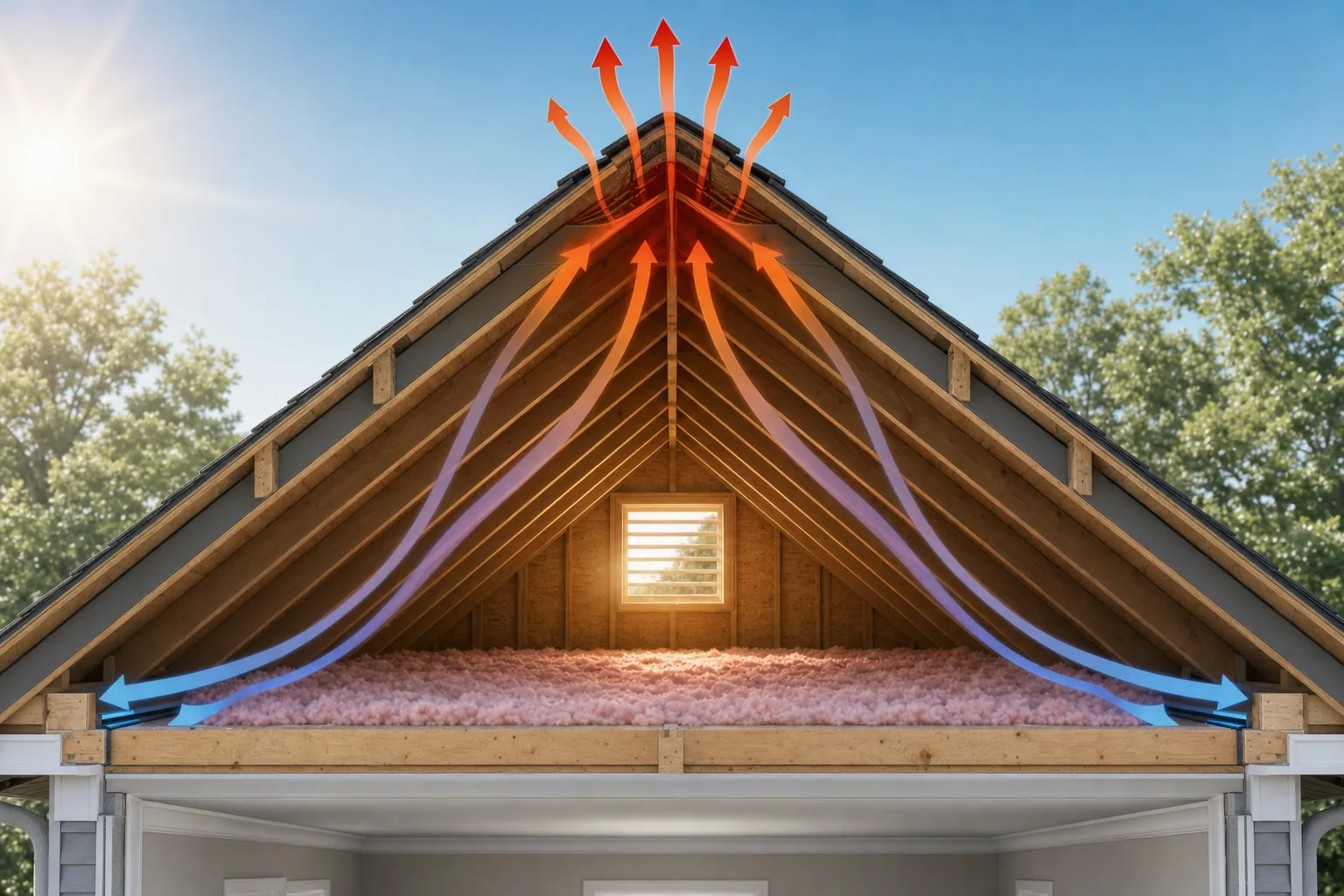
Think of attic ventilation as a continuous cycle: cool air enters through soffit vents at the eaves, flows across the attic space, and exits through ridge vents or gable vents at the top. This natural convection keeps temperatures balanced and prevents moisture from settling on wood framing and the underside of your roof deck.
How Poor Ventilation Damages Your Roof
When airflow is blocked or insufficient, your roof becomes vulnerable in multiple ways.
Moisture is the primary culprit. In Oklahoma's climate, humidity rises through the floor of your attic from living spaces below. Without ventilation to carry it out, that moisture condenses on cold surfaces, especially during winter. Over time, this creates an ideal environment for mold, mildew, and wood decay. Roof decking that should last 30 to 40 years can fail in half that time when trapped moisture is at work.
Heat is equally damaging. During summer, attic temperatures can exceed 150 degrees Fahrenheit without proper airflow. This extreme heat accelerates the breakdown of roofing shingles and can cause them to curl, crack, or become brittle. Damaged shingles fail to seal properly, leaving your home open to leaks.
Ice dams present another ventilation-related risk in Tulsa winters. When warm attic air melts snow on the roof but cold outdoor air freezes it at the eaves, ice dams form. Water backs up under the shingles and leaks into your home, causing water damage that can take months to discover. A properly ventilated attic maintains a consistent temperature closer to outdoor conditions, preventing this cycle.
Assess Your Attic's Current Ventilation
Before investing in improvements, determine whether your attic has adequate airflow. Look for these signs of poor ventilation:
- Visible mold, mildew, or dark stains on roof decking or trusses
- Damp or wet insulation
- Roofing shingles that curl, blister, or deteriorate prematurely
- Excessive heat in the attic during summer
- Water stains or leaks in the attic after heavy rain or snow melt
- Sagging roof or visible signs of wood rot
If you notice any of these, your attic is not breathing properly. The Tulsa area's humidity and seasonal temperature swings make adequate ventilation essential for any home.
Improve Attic Ventilation: Methods and Options
There are several proven ways to enhance your attic's airflow. The best solution depends on your roof design, local building codes, and existing ventilation infrastructure.
Ridge vents run along the peak of your roof and allow hot, moist air to escape at the highest point. They work best when paired with soffit vents that draw cool air in from the eaves. Ridge vents are highly effective and aesthetically subtle compared to other options.
Soffit vents are installed in the overhang under the eaves and provide the intake point for fresh air. If your home has solid soffit without vents, adding them is often the first step to improving circulation.
Gable vents are mounted in the triangular sections at roof peaks. They allow air to exit but work best as supplemental vents rather than the primary system.
Attic fans use powered ventilation to actively pull warm air out of the attic. These are particularly useful in hot climates or for homes with limited passive ventilation options.
Understanding attic fan installation cost is important if you're considering that route. Powered fans typically range from several hundred to over a thousand dollars depending on size, installation complexity, and whether you add a thermostat or humidistat control. While they offer active cooling, they consume electricity and require maintenance. Passive ventilation through ridge and soffit vents often delivers better long-term value with no moving parts to fail.
Attic Fan Installation Cost and ROI
If you decide a powered fan is right for your home, budget accordingly. A basic attic fan runs between 400 and 800 dollars installed, while a higher-end system with smart controls can exceed 1,500 dollars. However, the cost depends on:
- Fan size and motor efficiency
- Height and accessibility of your roof
- Whether existing electrical lines serve the attic
- Local labor rates in Tulsa
For most Tulsa homeowners, passive ventilation through proper ridge vent installation and soffit vents offers superior value. These require no electricity, have no moving parts, and function continuously as long as airflow isn't blocked.
Professional Installation Makes a Difference
Improper ventilation installation can create new problems. Vents that aren't sealed correctly leak air, defeating their purpose. Fans installed with inadequate intake pull conditioned air from your living spaces instead of outside air, wasting energy.
When you work with experienced local contractors, you get ventilation designed for Tulsa's specific climate and building codes. The team at Trifecta Roofing and Restoration understands how regional weather patterns affect roofing performance and designs ventilation systems that work with your existing roof structure to prevent water damage and improve energy efficiency.
Proper ventilation installation is part of comprehensive roof care. Whether you're dealing with an aging roof, storm damage, or simply want to extend the life of your current shingles, adequate attic airflow protects your investment.
Ventilation and Year-Round Home Protection
Benefits of proper attic ventilation extend across all seasons. Summer cooling becomes more efficient when heat doesn't accumulate in the attic, lowering your energy bills. Winter ice dams become less likely. Year-round, mold and wood decay are prevented, protecting your family's health and your home's structural integrity.
If your Tulsa home hasn't had a professional roof and attic inspection in the last few years, now is the time to schedule one. Hidden moisture problems, inadequate venting, or aging ventilation components can silently damage your roof for months before visible leaks appear. Addressing ventilation issues early costs far less than roof replacement or dealing with water damage throughout your home.
Your roof's health depends on what's happening underneath. Proper attic ventilation is a foundational part of the protection your home deserves. Reach out today to discuss your attic's current ventilation and explore solutions tailored to your Tulsa home's needs.