

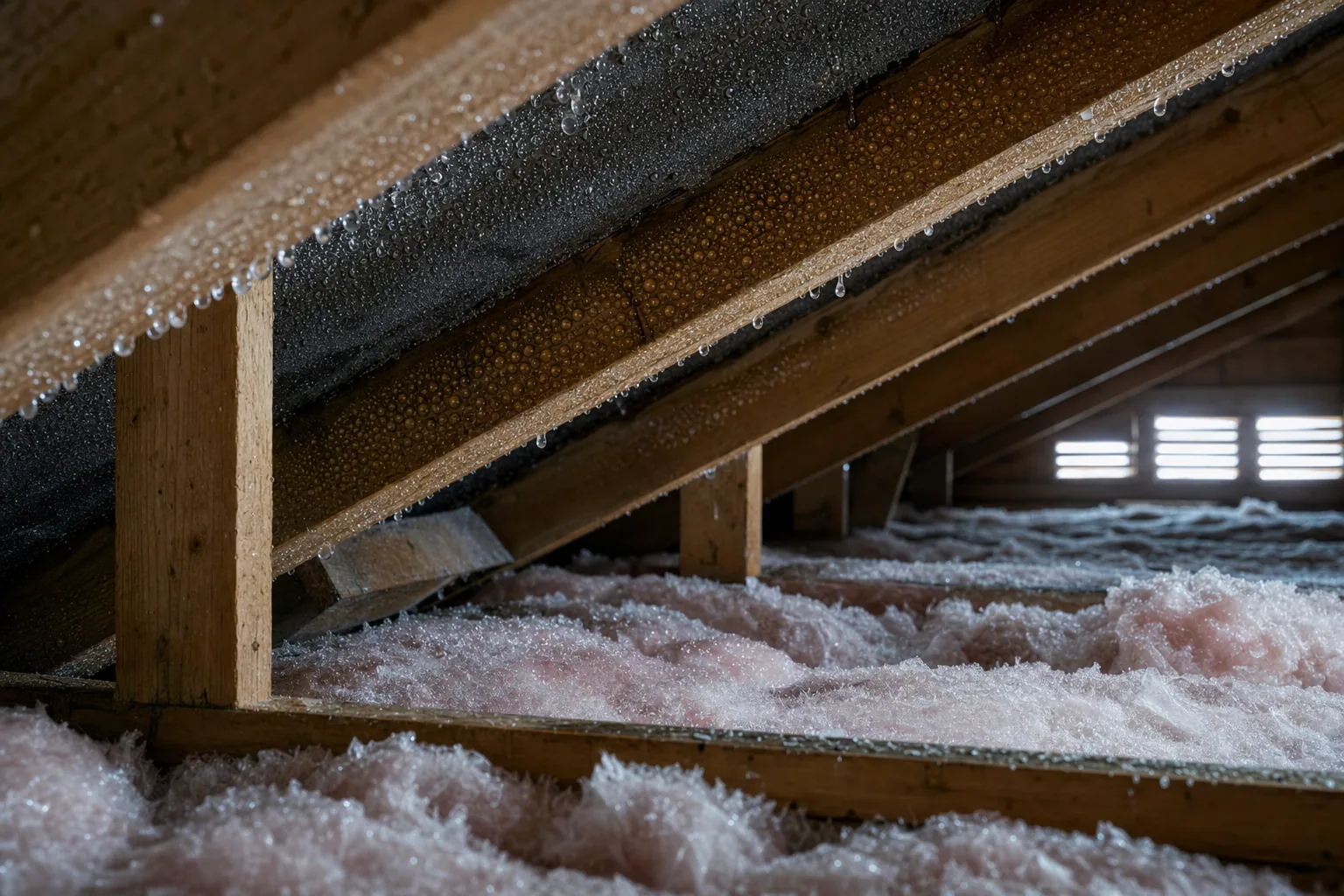
Attic condensation is one of the most overlooked threats to your Tulsa home. While it might seem like a minor issue, moisture buildup in your attic can lead to mold growth, rotted wood framing, damaged insulation, and structural problems that cost thousands to repair. Understanding what causes condensation in your attic and how to fix it can save you money and protect your family's health.
Attic moisture problems often develop silently. By the time you notice the damage, water may have already compromised your roof structure or created the perfect environment for mold. The good news is that condensation in your attic is preventable and fixable when you catch it early.
What Causes Condensation in Your Attic
Attic humidity control starts with understanding how condensation forms in the first place. Condensation happens when warm, moist air meets a cold surface. In your attic, this typically occurs during winter months or in early morning hours when outdoor temperatures drop.
Here are the main culprits:
- Warm, humid air rising from living spaces below through gaps and cracks
- Poor attic ventilation that traps moisture rather than allowing it to escape
- Inadequate insulation barriers between conditioned living areas and the attic
- Bathroom and kitchen exhaust fans vented directly into the attic instead of outdoors
- Dryer vents terminating inside the attic
- High indoor humidity from cooking, showers, and laundry
- Blocked or insufficient soffit and ridge vents preventing air circulation
When these moisture sources combine with inadequate ventilation, water vapor condenses on cold attic surfaces, leading to attic moisture problems that worsen over time.
How to Spot Condensation in Your Attic
Regular attic inspections are your best defense. Look for these warning signs:
- Water droplets or frost on roof decking, beams, or nails
- Damp or discolored insulation
- Musty odors in your home or attic
- Visible mold or mildew growth
- Soft or spongy wood framing
- Rust stains on metal fasteners or ductwork
- Peeling paint on attic rafters
If you notice any of these signs, your home likely has attic humidity control issues that need immediate attention. Ignoring them allows moisture damage to spread and compound.
The Role of Poor Ventilation
Proper attic ventilation is essential for managing moisture. Your roof system needs continuous airflow from soffit vents (lower intake) to ridge vents or gable vents (upper exhaust). This creates a ventilation pathway that carries humid air out of your attic before it can condense.
Many older Tulsa homes have outdated or blocked ventilation systems. Insulation installed incorrectly can cover soffit vents, blocking fresh air intake. Leaves, debris, and bird nests can clog vents. Without proper airflow, attic humidity control becomes impossible, and condensation accumulates.
If you suspect ventilation problems, contact a qualified contractor to assess your roof system. Proper ventilation not only prevents condensation but also extends your roof's lifespan and improves energy efficiency.
Practical Solutions to Fix Attic Condensation
Solving condensation in your attic requires a multi-step approach:
Improve Ventilation: Ensure soffit and ridge vents are clear and properly sized for your attic space. Consider adding additional vents if your current system is undersized.
Seal Air Leaks: Caulk gaps around pipes, wires, and ducts that allow warm air from below to escape into the attic. Pay special attention to the attic access hatch.
Redirect Moisture Sources: Vent bathroom fans, kitchen exhaust, and dryer vents directly outdoors, not into the attic. This single fix often eliminates a major moisture source.
Install Vapor Barriers: Ensure insulation has proper vapor barriers facing the warm side of the attic. If insulation is damaged or lacks barriers, consider replacing it.
Increase Attic Insulation: Proper insulation minimizes temperature differences that cause condensation. It also improves your home's energy efficiency.
Control Interior Humidity: Fix plumbing leaks, use bathroom exhaust fans during showers, and consider a whole-home dehumidifier if indoor humidity consistently stays above 50 percent.
Attic Fans: In hot climates, attic fans can help push moisture-laden air out during the day, though they must be used carefully to avoid pulling conditioned air from living spaces.
When to Call a Professional
While some ventilation improvements are straightforward, diagnosing and fixing complex attic moisture problems often requires professional expertise. If you've already noticed significant mold growth, rotted wood, or water stains, professional assessment is critical.
A trained contractor can identify hidden moisture sources, evaluate your ventilation system, check for roof leaks, and recommend solutions tailored to your home and local climate. In Tulsa and surrounding areas, working with a local contractor who understands regional weather patterns and building codes is especially valuable.
Taking action now prevents attic moisture problems from becoming expensive repairs later. Condensation left unchecked can compromise your roof structure, destroy insulation, and create conditions where mold thrives. By addressing ventilation, sealing air leaks, and managing moisture sources, you protect one of your home's most critical systems.
If you're noticing signs of condensation in your attic or suspect ventilation problems, don't wait. Contact a qualified roofing and restoration contractor in the Tulsa area to schedule an inspection. Early intervention saves money and protects your home's health and value.