

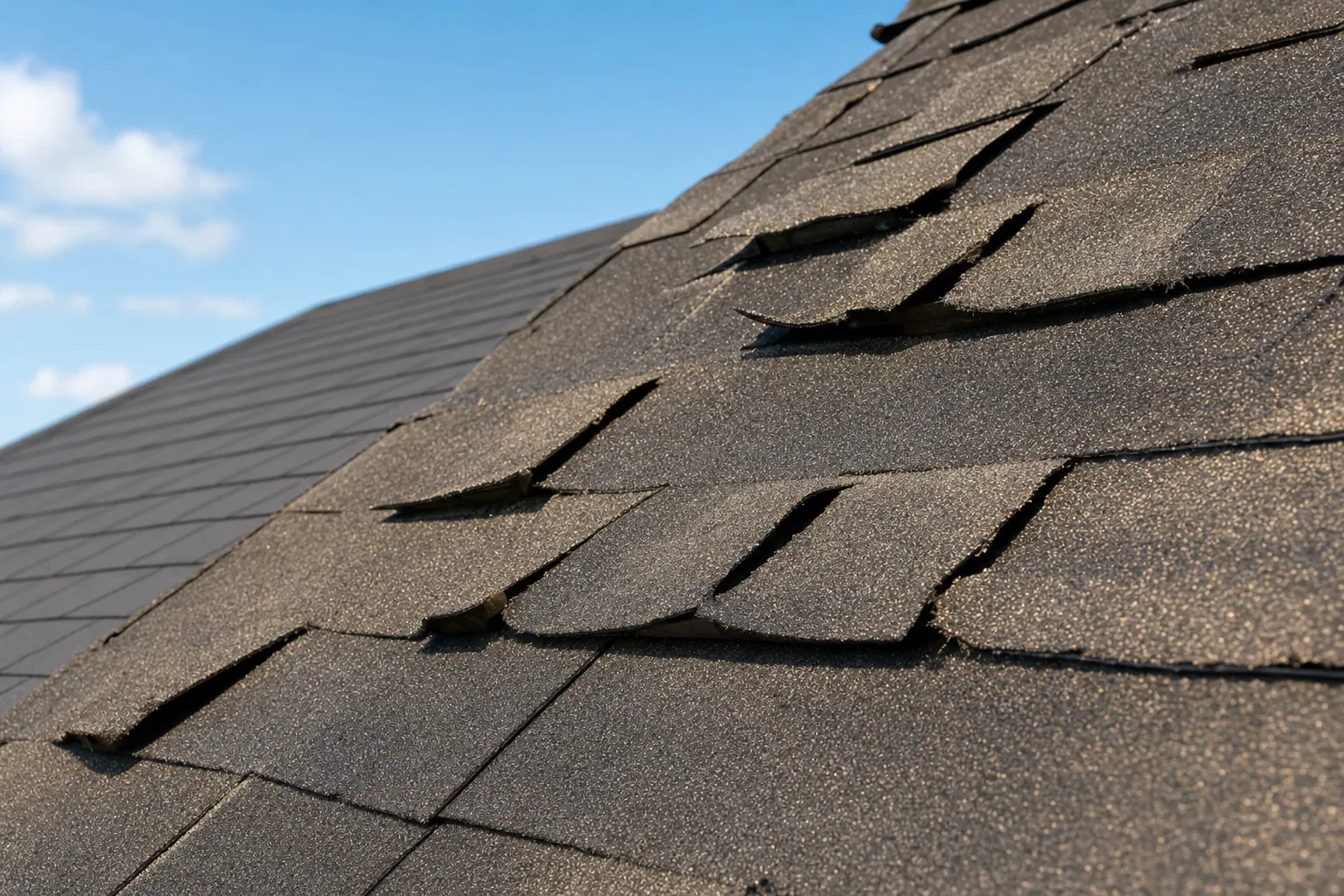
When you look up at your roof and notice the edges of your shingles are curling up or the surface looks wavy and buckled, that is a warning sign you cannot ignore. Curling roof shingles and buckling roof shingles are not cosmetic issues. They are symptoms of problems that, left unattended, can lead to water leaks, structural damage, and costly interior repairs.
Understanding what is happening to your roof and why it matters is the first step toward protecting your home. Let's walk through what causes these conditions and what you should do next.
Why Roof Shingles Curl and Buckle
Shingles curl or buckle for a few key reasons, often tied to how the roof is built, how it is maintained, or what the weather is doing to it.
Moisture and humidity are among the most common culprits. When water gets trapped under the shingles, it causes the material to expand and contract. Over time, this pushes the shingle edges upward, creating that telltale curled look. This often happens in areas where ventilation is poor or where water cannot drain properly.
Heat and sunlight accelerate the problem. The sun's UV rays break down the asphalt in shingles, making them brittle. As the roof heats up during the day and cools at night, the shingles flex and warp. Older shingles are especially vulnerable because the granules that protect them have already worn away, exposing the asphalt underneath.
Poor attic ventilation is another major cause. If your attic does not have enough airflow, heat and moisture build up. This creates a perfect storm: moisture weakens the shingles from below while heat weakens them from above. The result is buckling that spreads across entire sections of your roof.
Installation problems can also be to blame. If shingles were fastened incorrectly, not sealed properly, or installed over an uneven surface, they are more likely to curl and buckle as they age. This is why working with experienced contractors who understand proper installation techniques matters so much.
The Difference Between Curling and Buckling
While these terms are often used together, they describe slightly different problems.
Curling happens when the edges or corners of a shingle lift upward and roll inward, creating a cup or wave shape along the edge. This usually starts at the corners and spreads.
Buckling is when the entire shingle develops a wave or ridge running across its width, as if the roof surface itself has become uneven. This can look like a long bump or valley in the middle of the shingle.
Both indicate that the shingle is no longer lying flat against the roof deck. Both expose gaps where water can seep underneath. Both need attention.
What Happens If You Ignore Curling Shingles
The danger of curling roof shingles goes beyond appearance. Once shingles start to lift or buckle, the protective barrier of your roof is compromised.
- Water can flow under the shingles instead of running off them, finding its way into the layers beneath.
- Moisture collects on the roof deck and in the insulation, eventually seeping into your attic and walls.
- Mold and mildew growth becomes a serious health risk inside your home.
- Your insurance coverage may be at risk if damage is traced back to a roof that was not maintained.
- The structural framing and decking begin to rot, a repair that is far more expensive than replacing shingles.
What starts as a curled edge can turn into thousands of dollars in water damage, especially if the problem goes unnoticed for months or years.
How to Spot Curling and Buckling Shingles
You do not always need to climb onto your roof to spot trouble. From the ground with binoculars, or from your gutters and fascia, you can see:
- Shingle edges that are not lying flat against the roof surface
- A wavy or rippled appearance across large areas
- Shingles that look darker or stained, which can indicate water underneath
- Missing granules (the sandy texture on shingles), which makes them more prone to warping
- Gaps between shingles where water could enter
If you notice any of these signs, especially after a storm or during a seasonal inspection, it is time to call a professional. Trifecta Roofing and Restoration offers free roof inspections so you can get an honest assessment of what is happening and what needs to be done.
When to Repair vs. Replace
The right fix depends on how widespread the problem is and how old your shingles are.
Repairs make sense if curling or buckling is limited to a small area, your shingles are still relatively young, and the underlying roof deck is in good condition. Replacing a few shingles and improving attic ventilation may solve the problem.
Replacement is necessary if most of your roof shows signs of curling or buckling, your shingles are near the end of their lifespan (15 to 20 years for most asphalt shingles), or if the damage is widespread. A full replacement prevents future water damage and gives you peace of mind.
Trifecta Roofing and Restoration specializes in both repairs and full roof replacements. Our team uses top-grade materials and proven techniques to ensure your roof is protected for years to come. We prevent water damage, enhance energy efficiency, and maintain your property value, which is why our customers trust us to handle their roofing needs.
Storm Damage and Shingle Problems
If you live in Tulsa, you know that high winds and hail can damage shingles in a hurry. Sometimes curling or buckling happens gradually, but severe weather can accelerate the process or cause it overnight. Wind can lift shingles and separate them from the roof, while hail can bruise and crack the surface.
After a storm, shingle damage is often covered by homeowners insurance. The trick is getting your claim processed fairly and quickly. Trifecta Roofing and Restoration works with most insurance claims to streamline the process and reduce your stress. We help ensure that you get the payout you deserve so your roof is repaired or replaced without shouldering the full burden yourself.
What to Do Next
If you are seeing signs of curling or buckling shingles on your Tulsa-area home, the best move is to get a professional inspection. Do not wait for the problem to get worse. Trifecta Roofing and Restoration is here to help. We combine expertise with a commitment to quality, using only top-grade materials and transparent communication throughout every project.
Reach out today for a free, no-obligation roof inspection. Our team will give you an honest look at your roof's condition, explain what is happening, and recommend the right solution. We are local to Tulsa, we know your local needs, and most of our customers come to us through word-of-mouth because they trust us to do the job right the first time.