
Why Exterior Caulk Matters More Than You Think
Your home's exterior caulk is one of its most important water barriers. It seals gaps between windows, doors, trim, and siding, preventing moisture from penetrating into the framing, insulation, and interior walls. When exterior caulk fails, water doesn't just drip into your basement. It creeps into cavities, sits in wall cavities, and feeds mold growth that damages structural integrity and threatens your family's health.
Tulsa's climate makes caulking even more critical. Our hot summers, cold winters, and severe weather events like hail and high winds put constant stress on sealants. Caulk that works in a mild climate will fail faster here. That's why understanding caulk failure and catching it early can save you thousands in water damage repair and mold remediation.
What Causes Exterior Caulk to Fail
Caulk is a flexible sealant designed to last five to ten years under normal conditions, but several factors can shorten that lifespan:
- UV exposure: Sunlight breaks down the chemical bonds in caulk, causing it to become brittle and crack.
- Temperature cycling: Repeated expansion and contraction from hot days and cold nights create stress that splits caulk apart.
- Poor application: Caulk applied too thin, over dirty surfaces, or in the wrong weather won't bond properly.
- Wrong caulk type: Using interior caulk outdoors or selecting a product incompatible with your siding material guarantees failure.
- Lack of maintenance: Caulk that's never inspected or recaulked will eventually give out, especially in Oklahoma's intense sun.
- Storm damage: High winds and hail can dislodge or crack caulk, creating immediate vulnerabilities.
How to Spot Exterior Caulk Failure
Regular inspection is your best defense. Walk around your home twice a year, especially in spring and fall, looking for these warning signs:
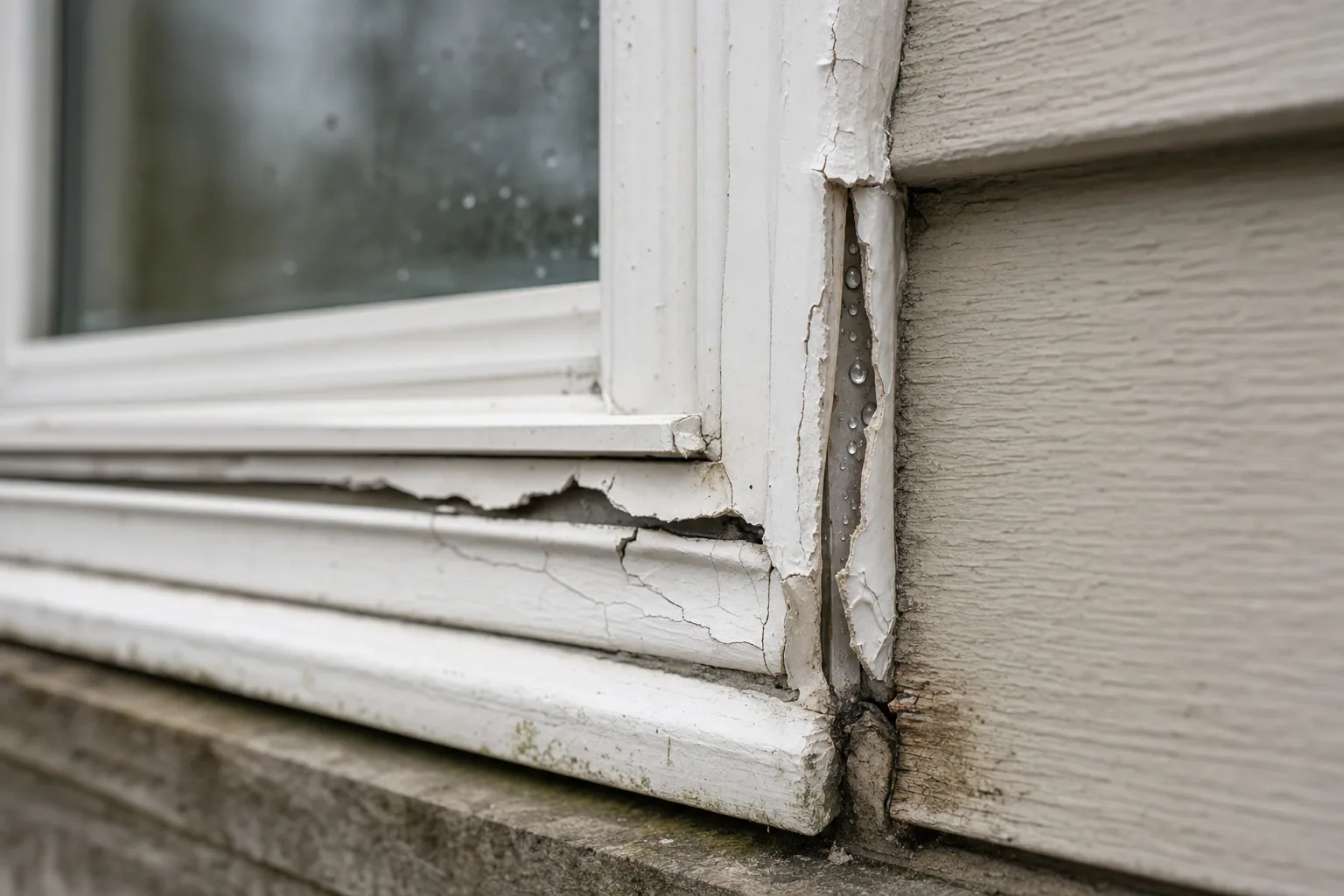
- Visible cracks or splits in the caulk line, especially around windows and door frames.
- Gaps or separation where caulk has pulled away from the siding, trim, or window frame.
- Peeling or flaking caulk that comes off in chunks when you touch it.
- Discoloration or mold on the caulk itself or on the siding immediately around it.
- Water stains or damage on interior walls, ceilings, or trim behind the failed caulk area.
- Soft spots in siding or wood trim that feels spongy to the touch, indicating trapped moisture.
If you notice any of these issues, don't wait. Water damage accelerates once caulk fails, and the longer you leave it, the more expensive the repair becomes.
The Real Cost of Ignoring Failed Caulk
It's tempting to overlook a crack or small gap in exterior caulk. It's just caulk, right? Wrong. Ignoring caulk failure leads to a cascade of problems:
Water enters wall cavities and sits there, feeding mold and mildew that spread unseen. Wooden framing absorbs moisture and rots, weakening the structural integrity of your home. Insulation becomes waterlogged and loses its R-value, causing your heating and cooling bills to skyrocket. Drywall absorbs water, becomes soft, and eventually crumbles. Pest infestations follow moisture damage, as insects and rodents are attracted to damp spaces.
A small $200 recaulking job neglected for a year can turn into a $5,000 or more water damage repair involving structural framing replacement, mold remediation, and drywall restoration. Your insurance may also deny claims if you failed to maintain the exterior envelope of your home properly.
Preventing Caulk Failure with Proper Weather Sealant Selection
Not all caulks are equal. Using the right product for the job is half the battle:
Polyurethane caulk: Excellent durability and flexibility, ideal for areas with high movement. Holds up well to UV and temperature changes. Takes longer to dry.
Acrylic latex caulk: Easy to apply and clean up, paintable, and affordable. Less durable than polyurethane, typically lasts 5-7 years before failure.
Silicone caulk: Extremely flexible and water-resistant, perfect for areas prone to moisture. Doesn't accept paint and can be harder to work with.
Hybrid caulk: Combines polyurethane and silicone benefits for good durability, flexibility, and ease of application.
For Tulsa homes exposed to intense sun and temperature swings, polyurethane or hybrid caulks are your best bet. They cost more upfront but last significantly longer and reduce the frequency of recaulking.
Professional Recaulking and Inspection
While small caulk repairs can be DIY projects, professional recaulking ensures the job is done correctly and lasts longer. Proper technique involves:
- Removing old, failed caulk completely using a caulk removal tool.
- Cleaning the joint thoroughly to remove dirt, mold, and debris.
- Drying the area completely, especially in joints where moisture lingers.
- Applying new caulk with the right technique to ensure full adhesion and proper depth.
- Using quality materials suited to the climate and surface type.
When you work with Trifecta Roofing and Restoration for exterior maintenance or storm repairs, we assess your caulking during the inspection. Our team uses top-grade materials and proven techniques to seal your home against water damage, whether it's new caulking or addressing damage from wind or hail events. We ensure your project includes transparent communication every step of the way so you understand what we're doing and why.
When Caulk Failure Becomes a Bigger Problem
If you've already noticed interior water damage from failed caulk, the problem extends beyond simple recaulking. You may need to address water damage inside walls, check for mold, and repair or replace damaged siding or trim. This is where professional assessment becomes critical.
Storm damage can accelerate caulk failure or create new failures overnight. After high winds or hail, inspect caulked joints carefully. Damage that looks minor on the surface often hides deeper structural issues that require professional evaluation.
Protect Your Home From Water Damage
Exterior caulk failure is preventable with regular inspection and timely maintenance. Catching cracks and gaps early means a simple recaulking job instead of extensive water damage repair. In Tulsa's harsh climate, using premium weather sealant and professional application gives your home the best protection.
If you've spotted failed caulk around your windows or doors, or if you're concerned about water damage after a storm, reach out to Trifecta Roofing and Restoration. We'll inspect your exterior thoroughly and recommend the right solutions to keep water out and your home safe and sound.