

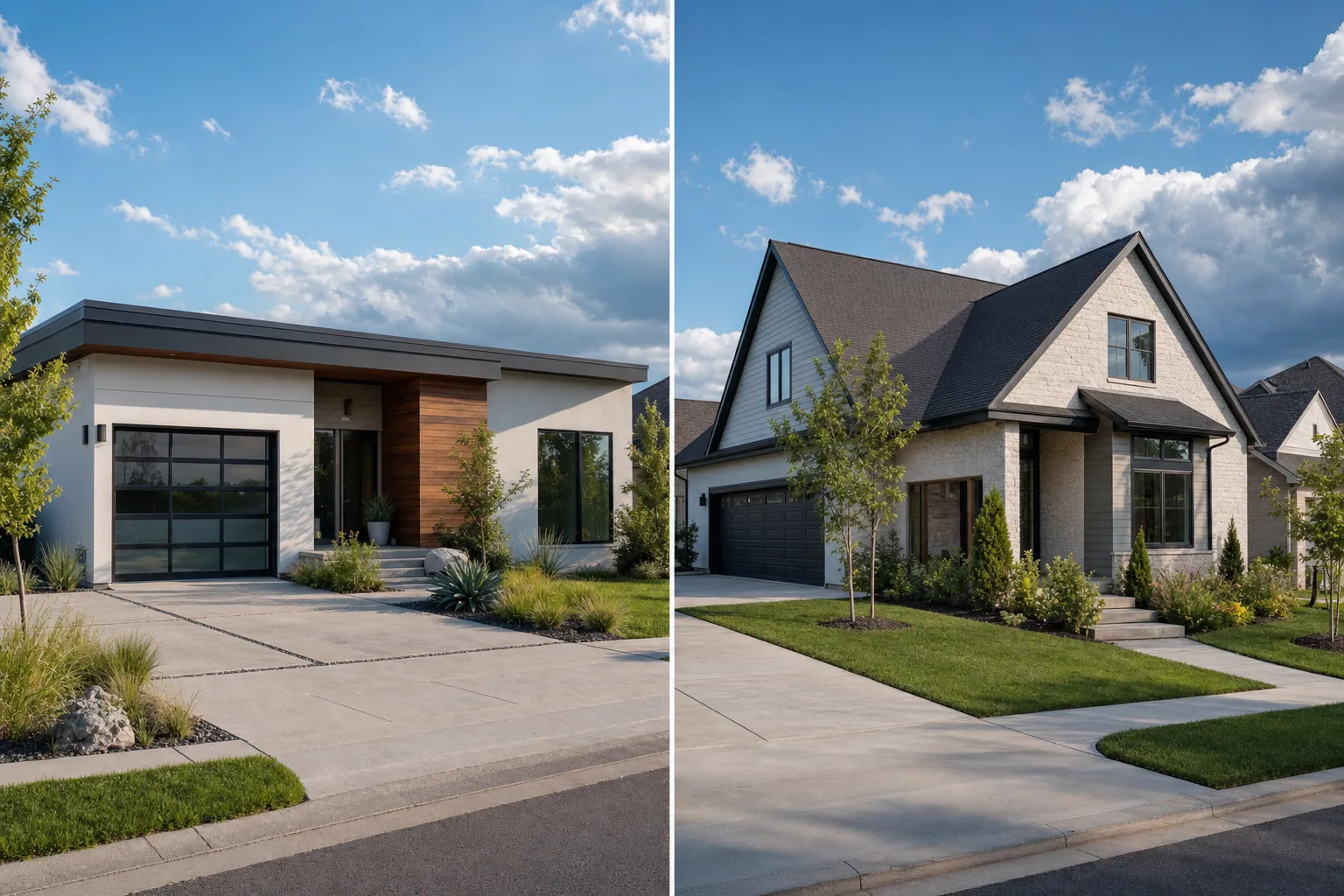
When it comes to choosing a roof system for your Oklahoma home, the decision between flat and pitched roofs affects everything from maintenance costs to how well your home withstands severe weather. Both styles have distinct advantages and drawbacks in the Tulsa climate, and understanding the differences can help you make the right choice for your property.
What Makes These Roof Types Different
The most obvious distinction between flat and pitched roofs is their angle. A flat roof has minimal slope, typically between 0 and 3 degrees, allowing water to sit briefly before draining. A pitched roof, also called a gabled or sloped roof, angles steeply from the peak down to the gutters, shedding water quickly and naturally.
Beyond appearance, this fundamental difference affects how each roof performs in terms of water drainage, durability, and structural demands. Oklahoma's weather patterns, which include heavy rain, hail, and high winds, make this distinction particularly important for homeowners.
Weather Performance in Oklahoma's Climate
Oklahoma experiences severe weather that puts roofs to the test. Heavy spring thunderstorms, occasional hail, and strong wind gusts mean your roof must shed water quickly and resist impact.
Pitched roofs excel in these conditions. Their steep angle allows rain and melted snow to run off rapidly, reducing the chance of pooling water that can lead to leaks. The design also naturally sheds hail and debris before it accumulates. Many traditional homes in Oklahoma have pitched roofs for this very reason, and the style has proven its resilience over decades.
Flat roofs, by contrast, require excellent drainage systems to prevent water from sitting on the surface. In Oklahoma's heavy rain events, standing water is a real concern. If your flat roof's drainage system becomes clogged with debris or fails, you risk ponding water that can eventually compromise the membrane and cause interior leaks.
Maintenance and Long-Term Care
Maintenance requirements differ significantly between the two styles, and this directly impacts your wallet over time.
Flat roofs need regular inspections and maintenance:
- Debris removal from drains and the surface itself
- Membrane checks for cracks, blisters, or deterioration
- Drainage system cleaning after storms
- Sealant reapplication around penetrations and seams
- Pooling water inspection and correction
Pitched roofs require less frequent, less intensive maintenance. However, they still need attention:
- Annual gutter cleaning to prevent water backup
- Shingle or material inspections for damage
- Flashing checks around chimneys and vents
- Debris clearing from valleys and slopes
If you live in a wooded area around Tulsa, pitched roofs do require more leaf and branch removal. Flat roofs, while they shed debris more easily off the surface, demand more rigorous drainage maintenance. For most homeowners, pitched roofs prove less demanding overall.
Cost Considerations
Both installation and repair costs factor into your decision.
Flat roof installation typically costs less upfront because it requires fewer materials and faster labor. However, the savings often reverse over the roof's lifetime. Flat roofs require more frequent repairs, membrane replacements happen sooner, and drainage system failures can be costly. A leak in a flat roof's membrane may not show symptoms until significant interior damage has occurred.
Pitched roofs cost more to install due to the additional framing and materials needed to create the slope. But they typically last longer and require fewer repairs. Damage is often visible immediately, allowing you to address problems before they worsen. Over 20-30 years, pitched roofs often prove more economical for Oklahoma homeowners.
When you're considering affordability, factor in replacement cycles as well. Most quality flat roofs last 15-20 years, while pitched roofs with proper maintenance can last 25-40 years depending on material.
Energy Efficiency and Climate Impact
How your roof handles Oklahoma's temperature extremes matters for your energy bills.
Flat roofs have a larger surface area exposed to the sun, which can increase cooling costs in hot Oklahoma summers. However, this same property allows for easier installation of solar panels if that interests you. You can also add reflective coatings to flat roofs to reduce heat absorption.
Pitched roofs naturally shed intense summer sun better due to their angle, and attics under pitched roofs can provide natural ventilation, reducing cooling costs. In winter, pitched roofs shed snow and ice more effectively, preventing ice dam formation. For most Oklahoma homeowners, pitched roofs offer a slight energy efficiency advantage during our hot summers.
Structural and Insurance Implications
Your home's structure and insurance coverage can also influence which roof type makes sense.
Flat roofs work best on homes with strong, reinforced structures to handle the weight of standing water during heavy rains. Some older Oklahoma homes may not be ideal candidates. Additionally, some insurance companies charge higher premiums for flat roofs due to increased water damage risk, or may require specific maintenance documentation.
Pitched roofs are standard across Oklahoma and typically result in lower insurance rates. Insurers view pitched roofs as lower risk because of superior water shedding and proven durability in our climate.
Before committing to either style, check with your homeowner's insurance provider. The cost difference in premiums over time could be significant.
Which Style Is Right for Your Oklahoma Home?
Choosing between flat and pitched roofs depends on several personal factors:
Choose a pitched roof if you want lower long-term maintenance, superior water shedding in Oklahoma storms, longer lifespan, and better insurance rates. This is the traditional choice for most residential homes in Tulsa and surrounding areas for good reason.
Consider a flat roof if you value the lower upfront installation cost, want additional usable space on the roof, or plan to install solar panels. Just be prepared for more frequent maintenance and potential higher insurance costs.
Most single-family homes in Oklahoma benefit from pitched roofs, while commercial buildings and some modern residential designs successfully use flat roofs with excellent drainage systems.
Work With a Local Expert
The best choice depends on your specific home, budget, climate expectations, and long-term plans. Trifecta Roofing and Restoration has worked with Oklahoma homeowners on both roof styles and understands how our local weather affects performance. We can assess your current situation, discuss the pros and cons for your property, and help you understand what makes sense for protecting your home and investment.
Ready to explore your roofing options? Contact us for a free consultation and let our local Tulsa experts guide you toward the right decision for your home.