
Understanding Gable Vents and Their Purpose
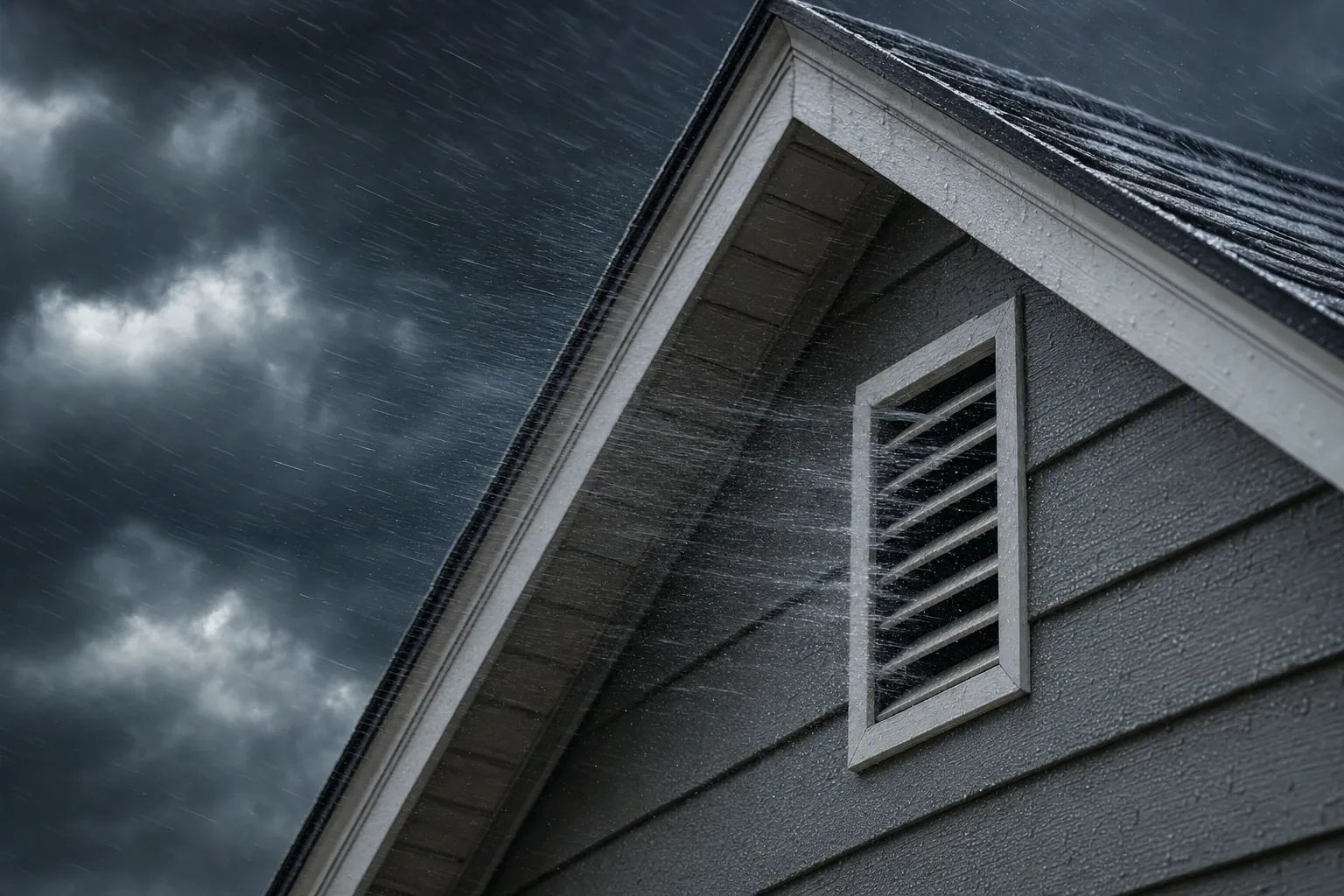
Gable vents are an essential part of your home's attic ventilation system. Located at the gable ends of your roof, these vents allow warm, moist air to escape from your attic during warm months and help regulate temperature year-round. When properly installed and functioning, gable vents work alongside other ventilation components to prevent moisture buildup, reduce heat stress on your roof, and extend the lifespan of your roofing materials.
However, gable vents can become a liability during heavy rain and severe weather. Their design, while effective for air circulation, leaves them vulnerable to water infiltration if they're not properly constructed, positioned, or maintained. Understanding this risk is crucial for Tulsa homeowners who face intense spring storms and hail events.
How Water Gets Inside Through Gable Vents
During a heavy rainstorm or high wind event, rain doesn't always fall straight down. Wind-driven rain can approach your roof from any angle, and gable vents are especially susceptible because they're often positioned to catch moisture when weather is turbulent. Here's what happens:
- Wind pushes rain horizontally against the vent louvers
- Water can bypass the louvers and enter the attic space directly
- Poor vent sealing or gaps around the vent frame allow water to seep through
- Clogged or damaged louvers fail to shed water effectively
- Standing water around the vent base creates pooling and eventual penetration
Once water enters your attic, it can saturate insulation, promote mold growth, rot wooden framing, and eventually drip down into your living spaces. What starts as a small leak during one storm can cost thousands in repairs if left unchecked.
The Real Risk: Moisture and Mold Growth
Water infiltration through gable vents creates an ideal environment for mold and mildew. Your attic is often warm, dark, and poorly ventilated in some spots, making it a breeding ground for moisture-loving fungi. Mold poses serious health risks, especially for children, elderly family members, and anyone with respiratory sensitivities.
Beyond health concerns, unchecked moisture in your attic can compromise your home's structural integrity. Wood rot develops slowly but relentlessly, weakening roof trusses and support beams. By the time you notice sagging or serious damage, repairs can exceed roof replacement costs.
This is why proper roof ventilation and vent maintenance matter so much. Unlike simple air movement, managing moisture infiltration requires attention to detail in both design and upkeep.
Inspecting Your Gable Vents for Vulnerabilities
A thorough inspection is your first defense against water damage. Here's what to look for:
- Check the vent frame and sealing around all edges where the vent meets the roof material
- Look for gaps, cracks, or separation in caulking and flashing
- Inspect the louver blades for damage, rust, or debris buildup
- Verify that the vent is properly angled to shed water away from the opening
- Walk your attic and look for water stains, discoloration, or soft spots on wood near the vent
- Check for visible mold, musty odors, or signs of past moisture damage
If you notice any of these warning signs, don't wait for the next storm to act. Water damage compounds quickly, and early intervention prevents expensive restoration.
Preventing Water Infiltration During Storms
Reducing gable vent water infiltration involves both maintenance and strategic upgrades:
Maintenance steps:
- Clean debris and leaves from around the vent regularly
- Check caulking and flashing annually, especially before severe weather season
- Inspect louver condition and replace damaged blades
- Ensure gutters and downspouts direct water away from your home's foundation and roof line
Upgrade options:
- Install high-quality, storm-resistant vent covers designed to prevent wind-driven rain
- Upgrade flashing materials to commercial-grade metal with proper slope
- Add sealant specifically rated for exterior use and UV resistance
- Consider installing a secondary moisture barrier in your attic if previous water damage has occurred
Many Tulsa homeowners find that upgrading their roof ventilation after a major storm is covered or partially covered by insurance claims, especially if prior damage can be documented. Working with an experienced contractor who understands both ventilation principles and insurance coverage can maximize your recovery.
When to Call a Professional
While homeowners can perform basic visual inspections, professional assessment of roof ventilation and water infiltration risk requires specialized knowledge. Contractors at Trifecta Roofing and Restoration understand how Tulsa's climate and severe weather patterns affect your attic ventilation. They can identify vulnerabilities that aren't obvious from the ground and recommend solutions tailored to your home's design and condition.
If your home has recently experienced wind or hail damage, or if you've noticed any signs of water penetration, a professional inspection is essential. Many roofing companies, including Trifecta, offer free inspections to assess current damage and prevent future problems. This is especially important if you're working through an insurance claim, as documentation of existing conditions can significantly impact your coverage.
Protecting Your Home's Value and Your Family's Health
Your roof is your home's first line of defense against the elements. Every component, from major structural areas to smaller features like gable vents, plays a role in keeping water out and maintaining a healthy interior. Neglecting ventilation and vent maintenance puts both your investment and your family at risk.
Tulsa homeowners deserve reliable guidance from local experts who understand regional weather challenges and building standards. If you're concerned about gable vents, water infiltration, or any aspect of your roof's condition, reach out today for a no-obligation inspection and honest assessment. Trifecta Roofing and Restoration combines transparent communication with top-grade materials and proven techniques to keep your home safe and sound.