

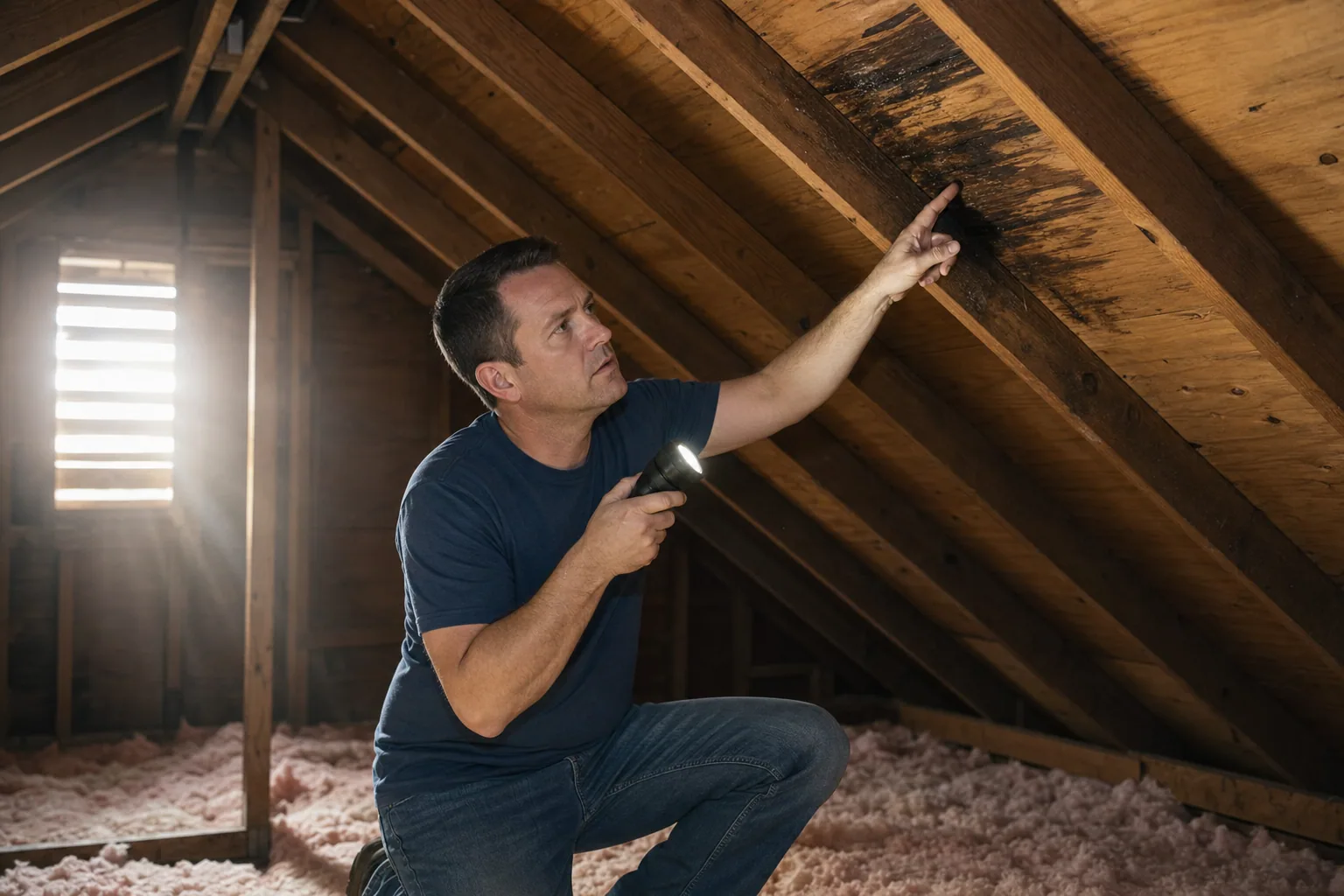
A roof leak might seem small at first, but even a pinhole-sized opening can allow gallons of water into your home each year. The damage spreads quickly through insulation, drywall, and framing before you ever see a drip on your ceiling. Catching a roof leak early is one of the best ways to prevent costly repairs and keep your home safe from mold, rot, and structural failure.
At Trifecta Roofing and Restoration, we've helped hundreds of Tulsa homeowners identify and repair roof leaks before they turned into disasters. Here's what you need to know about spotting the signs of a roof leak, where to look, and when to call a professional.
Common Signs of a Roof Leak
Water damage doesn't always announce itself with a dramatic drip. In fact, many homeowners miss the early warning signs entirely. Look for these common indicators:
- Stains on your ceiling or upper walls, even if you don't see active water dripping
- Peeling paint or bubbling wallpaper in upper rooms or attics
- Soft, spongy areas in your ceiling or walls
- Discoloration that spreads or darkens over time
- A musty smell in your attic, bedroom, or upper closets
- Visible mold growth or black spots in the attic or on insulation
- Sagging drywall or visible water pooling in your attic
- Wet insulation or damp wood beams in your attic space
If you notice any of these, the leak has likely been there for a while. The sooner you act, the better.
Check Your Attic First
Your attic is ground zero for leak detection. On a dry, sunny day, turn off the lights and let your eyes adjust. Water stains and mold will become much more visible in natural light. Look for dark patches, discoloration, or wet spots on the wood framing, particularly around:
- Roof valleys and seams where water naturally flows
- Chimney bases and flashing areas
- Vent penetrations and skylights
- The eaves where the roof meets the walls
- Areas directly above interior water stains
Bring a flashlight and a small mirror to reflect light into dark corners. Pay special attention to any wood that looks darker, softer, or different in texture than the surrounding material. If you press gently on a beam and your finger leaves an indent, the wood is compromised and the leak has been active for some time.
Inspect Your Roof's Exterior
A visual inspection from the ground or a safe ladder position can reveal physical damage that leads to leaks:
- Missing, cracked, or curling shingles
- Gaps or breaks in roof flashing around chimneys, vents, and skylights
- Deteriorated caulking or sealant
- Holes, punctures, or embedded debris
- Sagging areas or visible dips in the roofline
- Algae, moss, or dark streaks indicating moisture retention
Damage from wind and hail storms can create vulnerabilities that let water in months before any drip appears inside. Even small cracks in flashing can become serious leak sources during heavy rain.
Look for Gutter and Downspout Problems
Your gutters protect your roof by directing water away from your home. When they fail, water backs up and seeps under the shingles. Check for:
- Clogged gutters filled with leaves and debris
- Separated or rusted sections
- Improper slope or sagging gutters
- Downspouts that drain water too close to your foundation
- Standing water in the gutters after rain
Clogged gutters are one of the easiest roof leak causes to fix yourself, but professional inspection and cleaning can prevent bigger problems.
Know When to Call the Experts
If you spot any signs of a roof leak, or if you're uncertain about what you're seeing, contact Trifecta Roofing and Restoration for a professional inspection. Climbing on a roof can be dangerous, and a trained eye catches problems that homeowners miss.
Our team knows Tulsa's weather patterns and common leak vulnerabilities in local homes. We use proven detection methods to locate the source of leaks, not just where the water is dripping. This matters because water can travel along roof framing before it finds a path into your home, making the actual leak location different from where you see damage inside.
What to Do If You Find a Leak
If you discover signs of a roof leak:
- Document the problem with photos for your insurance claim if needed
- Move valuables away from affected areas
- Place a bucket under active drips to minimize water spread
- Do not attempt to repair the roof yourself if you see exposed damage
- Call Trifecta Roofing and Restoration for emergency assessment
Many roof leaks qualify for insurance coverage, especially if they result from storm damage. We work directly with insurance companies to make the claims process seamless and cost-effective for homeowners. Let us handle the technical details while you focus on protecting your family and belongings.
Early Detection Saves Money
A small roof leak repair costs a fraction of what you'll pay for water damage restoration, mold remediation, or structural repairs. Our roofing services are designed to prevent leaks and water damage in the first place, and to catch problems early before they spread.
If you live in Tulsa or the surrounding areas and suspect a roof leak, don't wait for the next rainstorm to confirm your fears. The damage is likely already happening. Schedule a free inspection with Trifecta Roofing and Restoration today. We'll identify the problem, explain your options, and get your roof back to protecting your home the way it should.