

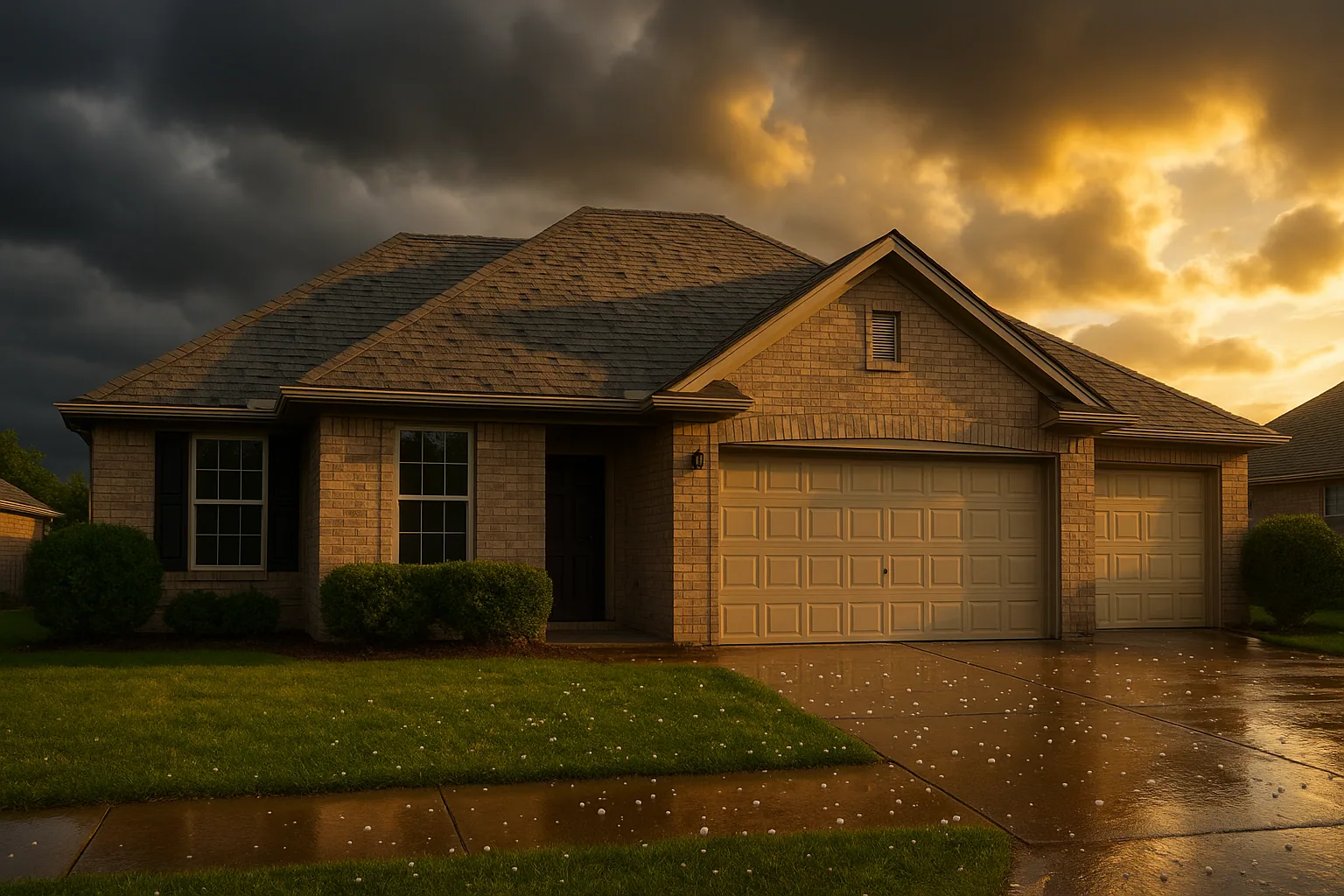
Hail season in Oklahoma is no joke. A storm that lasts twenty minutes can leave your roof with dozens of impact craters, cracked shingles, and damaged gutters that open the door to serious water intrusion. The good news is that most homeowners insurance policies cover hail damage. The frustrating part is that getting a fair payout requires more than just calling your insurer and hoping for the best.
This guide walks you through each step of the process so you can move quickly, document everything correctly, and avoid the common mistakes that get claims reduced or denied.
Assess the Damage Before You Call Your Insurer
Before you pick up the phone, take a careful look at your property from the ground. Never climb onto the roof yourself immediately after a storm. Wet shingles and unstable surfaces create real fall risks.
Instead, look for these signs from the ground and around your yard:
- Dents or dings on gutters, downspouts, and metal flashing
- Cracked or missing shingles visible from the edge of the roof
- Hail-battered window screens or siding panels
- Hailstones still on the ground (photograph them next to a ruler or coin for scale)
- Debris from shingles or granules washing into gutters and downspouts
Once you have a basic sense of the extent of damage, call a licensed local roofing contractor before you open a claim. A contractor can get up on the roof safely, identify damage you cannot see from the ground, and provide a professional assessment that carries weight with your insurance adjuster.
Document Everything With Photos and Notes
Insurance claims live and die on documentation. The more thorough your records, the harder it is for an adjuster to undervalue the damage.
Here is what to capture:
- Date and time stamps. Your phone camera records these automatically. Make sure your device clock is correct.
- Wide shots and close-ups. Get photos of the entire roof line, then zoom in on individual impact marks and broken shingles.
- Gutters and downspouts. Hail leaves round dents on soft metal that are easy to photograph and hard to dispute.
- Interior water damage. If water is already coming in, photograph any stains on ceilings or walls right away.
- Your contractor's written assessment. A professional damage report from a qualified roofer adds credibility to everything else in your claim file.
Create a folder on your phone or computer and keep every photo, note, and receipt in one place. You will thank yourself later.
File Your Claim Promptly
Most insurance policies include a window for reporting storm damage. Waiting too long can give the insurer grounds to question whether the damage actually came from the storm in question. File your claim as soon as you have documented the damage, ideally within a few days of the storm.
When you call your insurer, have the following ready:
- Your policy number
- The date of the storm
- A basic description of what you observed
- Your contractor's contact information if you have already scheduled an inspection
Your insurer will assign an adjuster to inspect the property. This is one of the most important steps in the process, and it is also where many homeowners lose money.
Understand the Adjuster's Role (and Its Limits)
The insurance adjuster works for your insurance company. Their job is to assess the damage accurately, but they are also working within guidelines that can lead to low initial estimates. That does not mean they are acting in bad faith, but it does mean you should not treat their first estimate as the final word.
Having your own roofing contractor present during the adjuster's inspection is one of the most effective things you can do. A knowledgeable contractor can point out damage the adjuster might overlook and advocate for a scope of repairs that reflects the true condition of your roof. One Trifecta Roofing and Restoration customer noted that with a couple of days of communication between their contractor and the insurance company, the final payout came out to roughly 95 percent of the job cost, even though the initial insurance estimate was far lower.
If your claim is denied or comes back far below what your contractor estimated, you have options. You can request a re-inspection, provide additional documentation, or invoke the appraisal process outlined in your policy. Understanding what to do when a roof insurance claim is denied ahead of time can save you a lot of stress if things do not go smoothly.
Work With a Contractor Who Handles Insurance Claims
Not every roofing company has experience working alongside insurance adjusters. Choosing one that does makes the entire process significantly smoother.
Trifecta Roofing and Restoration works with most insurance claims to make the process seamless and cost-effective. Their team manages every aspect of the repair, from the initial inspection through final installation, and communicates with homeowners at every stage so there are no surprises.
When evaluating contractors after a hail event, ask these questions:
- Do you have experience working with insurance adjusters?
- Can you provide a written damage report I can submit with my claim?
- Are you licensed and insured in Oklahoma?
- What materials do you use, and do they meet manufacturer and insurance standards?
- How do you handle supplemental claims if additional damage is found during repairs?
A contractor who answers these questions confidently and clearly is worth choosing. One who pressures you to sign before the adjuster visits or asks you to waive your deductible is a red flag.
Avoid Common Mistakes That Hurt Your Claim
A few missteps can significantly reduce what you receive from your insurer. Keep these in mind throughout the process:
- Do not make permanent repairs before the adjuster visits. Temporary tarping to stop active leaks is fine and necessary. Replacing shingles before the adjuster sees the damage is not.
- Do not accept the first estimate without review. Initial adjuster estimates often miss items like underlayment, flashing, or code upgrade requirements.
- Do not hire a storm chaser. Out-of-town contractors who show up door to door right after a storm frequently disappear once the job is done. Use a local company with verifiable reviews and a track record in the Tulsa area.
- Do not wait on interior damage. If water has already entered your home, document it and address it immediately. Delays can lead to mold and a secondary problem that complicates your claim.
It is also worth understanding how hail damage affects your home beyond the roof surface, since gutters, siding, and other exterior components may be part of a legitimate claim as well.
Take the Next Step With a Local Expert
Filing a roof insurance claim after hail does not have to be overwhelming. With solid documentation, a prompt filing, and a contractor who knows the claims process inside and out, most Tulsa homeowners can get their homes repaired with minimal out-of-pocket cost.
Trifecta Roofing and Restoration holds a 4.9-star rating across more than 150 reviews and earned the 2025 Angi Super Service Award for outstanding customer satisfaction. If your roof took a hit in a recent storm, reach out for a free inspection. Their team will assess the damage, walk you through the claims process, and make sure your home is protected with quality materials and reliable craftsmanship.