
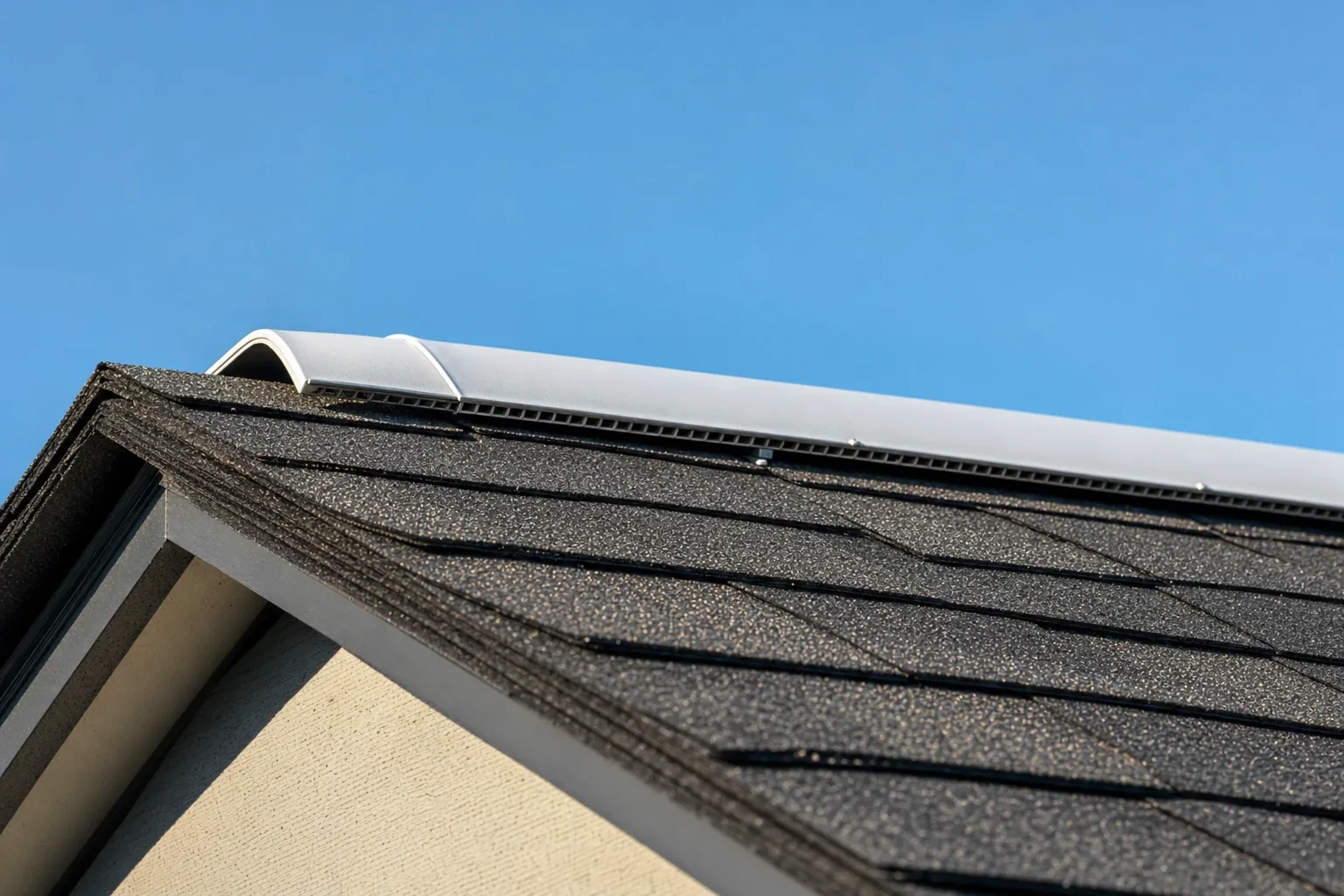
Your roof's ridge vent is one of the hardest working yet most overlooked parts of your home's exterior. It sits at the peak of your roof and does something critical: it allows hot, moist air to escape from your attic so your roof stays healthy and your energy bills stay reasonable. But when ridge vents fail, the problems stack up fast.
In this guide, we'll walk you through the most common ridge vent problems, why they happen, and what you need to do about them. If you live in the Tulsa area and suspect your roof ventilation system needs attention, Trifecta Roofing and Restoration can help.
How Ridge Vents Work
Before we dive into problems, let's talk about how a ridge vent is supposed to function. Your attic naturally fills with heat and moisture, especially in summer or after heavy rain. A ridge vent is essentially a continuous opening that runs along the peak of your roof, covered with a protective cap or screen to keep out rain and debris.
As warm air rises, it escapes through the ridge vent. At the same time, cooler outside air enters through soffit vents lower on the roof, creating natural airflow. This circulation does three important things:
- Prevents moisture from pooling and causing rot
- Keeps attic temperatures down, reducing strain on your cooling system
- Helps prevent mold and mildew growth
When this system works right, everyone wins. But when it breaks down, your entire roof can be at risk.
Common Ridge Vent Problems
Leaking Ridge Vents
The most common complaint we hear is water leaking around the ridge vent. This usually happens because of poor installation, deteriorating sealant, or flashing that has separated from the roof.
When shingles are installed over a ridge vent, they need to be properly sealed and nailed. If the roofing contractor cut corners or didn't follow manufacturer specs, water can find its way under the shingles and into your attic. Rain hitting the roof peak can also push water sideways under shingles if the overlap isn't right.
A leaking ridge vent often shows up as water stains on your attic ceiling or, worse, water dripping into living spaces below. Don't ignore these signs. Even small leaks can lead to mold, rotted wood, and structural damage over time.
Clogged or Blocked Ridge Vents
Over time, dust, dirt, shingle granules, and even leaves can accumulate inside or around your ridge vent. A clogged ridge vent can't do its job, which means your attic can't breathe properly.
When a ridge vent gets blocked, moisture gets trapped in your attic. This creates the perfect environment for mold growth and can cause your wood framing to soften and rot. You might notice higher energy bills because your air conditioning has to work harder to cool a hot, humid attic.
In some cases, blockages happen from the inside out. If your roof isn't properly ventilated from below, the buildup of dust and debris can actually block the ridge vent from the inside. This is why keeping your soffit vents clear is just as important.
Improper Installation
Not all ridge vents are created equal, and not all installers know how to put them in correctly. Some contractors use low-quality ridge vent material that deteriorates quickly. Others fail to remove the old roof peak or create a proper opening.
One of the biggest mistakes is installing a ridge vent without removing the ridge shingles or creating the proper continuous slot underneath. This leads to poor ventilation and eventual leaks. Another common error is using too much sealant, which can actually trap moisture instead of letting it escape.
If your ridge vent was installed within the last few years and you're already seeing problems, improper installation is likely the culprit.
Damaged or Deteriorating Vent Cap
The cap that covers your ridge vent takes a beating from sun, rain, and wind. Over time, UV exposure can crack the plastic or metal. Hail or fallen branches can physically damage it. Rust can develop on metal caps, especially in humid climates.
Once the vent cap starts to fail, it loses its ability to keep water and debris out while still allowing air to escape. You end up with moisture seeping in and ventilation becoming ineffective.
How to Spot Ridge Vent Problems Early
Catching problems early can save you thousands in repair costs. Watch for these warning signs:
- Water stains or discoloration on attic insulation or ceiling drywall
- Visible mold or mildew in your attic
- An unusually hot attic on summer days
- Higher than normal energy bills
- Visible damage to the ridge vent cap from ground level
- Peeling or bubbling paint on attic ceiling
- A musty smell in your attic or upper floors
If you notice any of these, schedule an inspection right away. The longer you wait, the more expensive the repairs become.
Solutions for Ridge Vent Issues
The right fix depends on what's wrong. For minor problems like clogs or granule buildup, cleaning the vent and improving soffit ventilation might be all you need. Many homeowners can handle this maintenance themselves, though getting on the roof safely is important.
For leaks, the solution usually involves resealing the shingles around the vent or replacing the flashing. If the ridge vent cap is damaged, replacement is straightforward. However, if the entire ridge vent system was improperly installed from the start, a full reinstallation may be necessary.
In some cases, installing additional soffit vents or even a supplementary ridge vent can solve ventilation problems that one ridge vent alone can't handle. This is especially true for larger homes or complex roof designs.
The best approach is to have a professional inspect your roof ventilation system. A qualified roofer can identify exactly what's causing the problem and recommend the most cost-effective solution.
Why Professional Help Matters
While some ridge vent maintenance is DIY-friendly, any repair or replacement should typically be handled by someone with roofing experience. Working on a roof peak is inherently dangerous, and mistakes can make the problem worse.
Trifecta Roofing and Restoration specializes in identifying and fixing roof ventilation issues. Our team uses top-grade materials and proven techniques to ensure your ridge vent system works as designed. We've helped countless Tulsa homeowners prevent water damage and improve their roof's lifespan by fixing ventilation problems early.
When you call us for an inspection, we'll examine your ridge vent, soffit vents, and overall attic ventilation. We'll explain what we find in clear, straightforward terms, then present your options. No surprises, no pressure, just honest roofing advice.
Keep Your Ridge Vent Working
Your ridge vent is a small but mighty part of your roof's defense against water damage and moisture problems. By understanding how it works, spotting problems early, and addressing them promptly, you can protect your home's interior and extend your roof's life.
If you're in the Tulsa area and have concerns about your roof ventilation or ridge vent condition, reach out to Trifecta Roofing and Restoration. We offer free roof inspections and can answer any questions about your home's exterior. Call us today to schedule your appointment.