

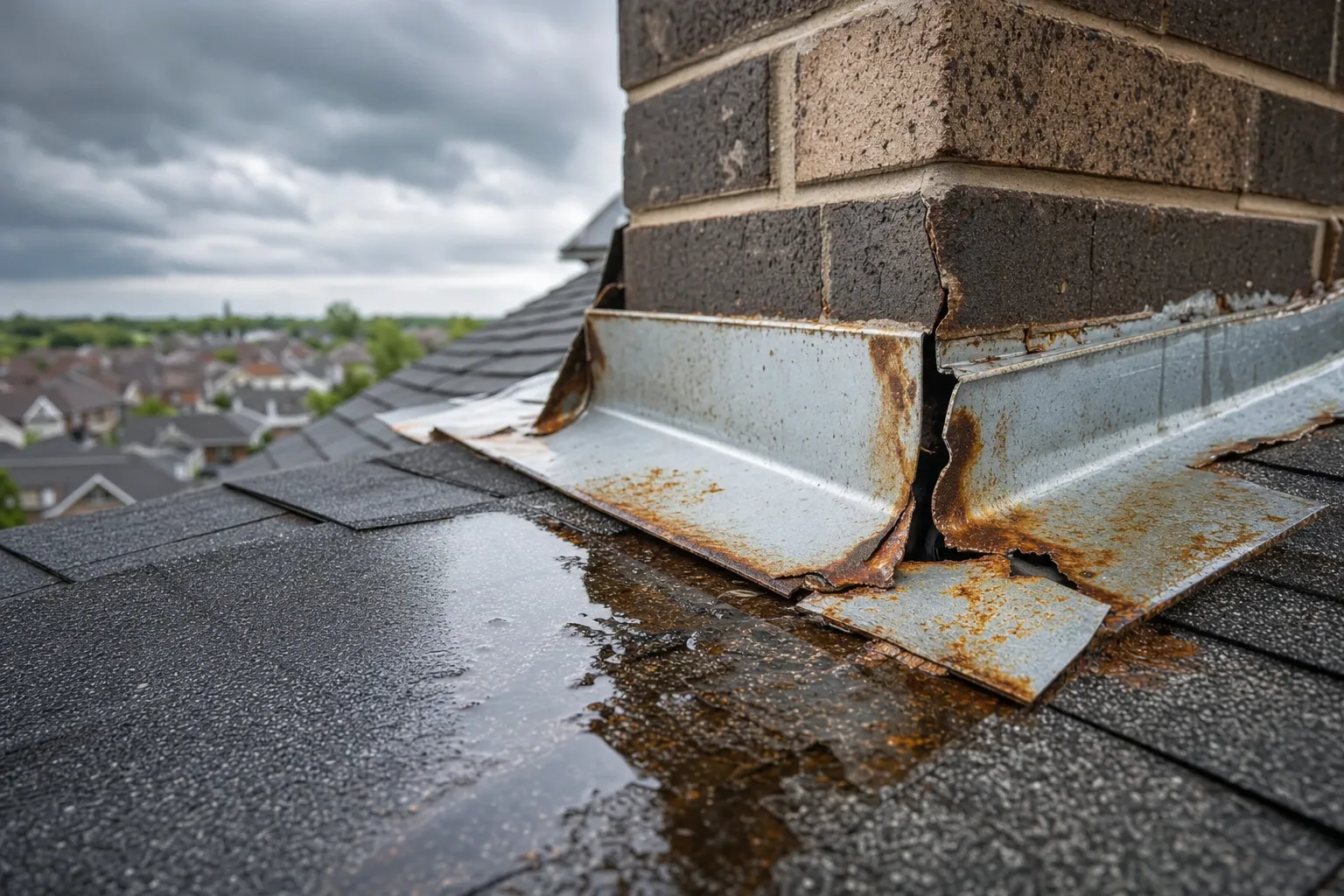
Roof flashing is one of those parts of your home that nobody thinks about until water starts dripping through the ceiling. Yet this thin metal barrier plays one of the most critical roles in keeping your house dry. When flashing fails, the damage spreads fast. Understanding what flashing does and recognizing the early warning signs can save you thousands in repair costs.
What Is Roof Flashing?
Roof flashing is a thin metal material, typically aluminum or galvanized steel, that directs water away from vulnerable roof joints and seams. It acts like a waterproof seal around areas where two roof planes meet or where structures like chimneys, vents, skylights, and valleys intersect the roof.
Think of flashing as a diversion system. When rain falls on your roof, flashing channels the water down and away from these weak points so it flows safely to the gutters instead of pooling or seeping into the structure below. Without proper flashing, water finds its way into the gaps and eventually into your attic, walls, and insulation. That's where the real damage begins.
Flashing comes in several common types, each designed for a specific purpose. Valley flashing runs along the V-shaped seams where two roof slopes meet. Chimney flashing wraps around chimneys to create a watertight seal. Vent flashing fits around pipes and exhaust vents. Drip edge flashing runs along the perimeter of your roof to guide water into the gutter. All of these work together to form your roof's water defense system.
Common Causes of Roof Flashing Damage
Flashing damage rarely happens by accident. Most problems stem from a combination of age, weather exposure, and installation issues.
Age and wear: Flashing expands and contracts with temperature changes year after year. Over time, the seals around flashing edges crack and deteriorate. Metal can rust or develop pinhole leaks. After 15 to 20 years, most flashing begins to fail.
Poor installation: Flashing that was installed incorrectly from the start is prone to failure. If the overlap is too shallow, if caulking was applied wrong, or if fasteners were driven through the metal at poor angles, water will eventually find its way past the seal.
Severe weather: High winds can lift or separate flashing edges. Hail can dent and crack metal. Falling tree branches can impact flashing and bend it out of alignment. After a significant storm, flashing damage is one of the most common hidden vulnerabilities homeowners miss during initial inspections.
Ice damming: In cold climates, ice can back up under flashing and force its way into gaps you didn't know existed. As the ice melts, water runs into your home.
Clogged gutters: When gutters overflow because they're plugged with leaves and debris, water pools around your foundation and flashing edges. Standing water accelerates rust and finds its way through tiny gaps.
Signs Your Flashing Is Leaking
Roof flashing problems don't always announce themselves loudly. Sometimes the warning signs are subtle but real.
Look for these indicators:
- Water stains on attic rafters or interior ceiling drywall, especially near chimneys, vents, or where roof valleys meet
- Mold or mildew growth in the attic or along insulation edges
- Rust or green patina on flashing metal visible from the ground or attic
- Gaps or separation between flashing and roof shingles
- Soft spots in fascia or soffit around where flashing connects
- Peeling caulk or missing sealant around flashing edges
- Water damage or yellowing on exterior walls near where a vent or chimney passes through the roof
Water often travels along framing and insulation before dripping through a visible ceiling stain. By the time you spot water inside, the flashing has likely been leaking for weeks or months. This is why regular inspections matter, especially after storms.
How Flashing Leaks Turn Into Major Problems
A small roof flashing leak can quickly escalate into expensive damage. Water seeping past flashing doesn't stop at the roof deck. It saturates insulation, reducing its R-value and your home's energy efficiency. It soaks into rafters and framing, promoting rot and structural decay. It creates the perfect environment for mold and mildew, which spread through your attic and ductwork, affecting indoor air quality and health.
Once water reaches the walls or interior cavities, the damage compounds. Drywall absorbs moisture and weakens. Electrical wiring becomes a hazard. Paint bubbles and peels. Eventually, the cost to fix one small flashing problem balloons into a roof replacement, new insulation, framing repairs, and mold remediation. That's why catching flashing damage early is so important.
Flashing Repair vs. Full Replacement
Not every flashing problem requires a total roof replacement. The solution depends on the extent of the damage.
Small leaks caused by cracked caulk, minor rust, or a single separated edge can often be sealed or patched. A roofer may reapply sealant, replace a rusted section, or secure lifted flashing back into place. This approach is quick and affordable.
Flashing that has significant corrosion, is cracked in multiple places, or has been separating from the roof for a long time usually needs replacement. Patching a heavily compromised flashing system is a temporary fix that fails again within months. Full replacement ensures a lasting, watertight seal.
If flashing damage is widespread across multiple areas or if water has already caused rot to the underlying roof deck or framing, a broader roof repair or restoration may be necessary. This is where a professional inspection becomes essential. Experienced roofers can assess whether repair will hold or if replacement is the smarter long-term choice.
Preventing Flashing Problems
The best way to avoid water damage is to catch flashing problems before they leak.
Have your roof inspected at least once a year, and always after severe weather like hail or high winds. Look for visible signs of rust, gaps, or separation. Keep gutters clean so water flows freely and doesn't pool around flashing edges. Trim tree branches that hang over your roof to reduce impact and keep debris out of valleys and vents. If you notice flashing that looks corroded or separated, call a roofer right away rather than waiting for a leak to develop.
Flashing problems are one reason Trifecta Roofing and Restoration emphasizes thorough inspections. Our process identifies vulnerable flashing before water damage spreads. We use top-grade materials and proven sealing techniques to ensure your roof stays dry year after year. When severe weather damages your roof, we manage the inspection and restoration work with precision and care.
Getting Help With Flashing Leaks
If you suspect flashing problems or have noticed water stains in your attic or ceiling, don't delay. Water damage accelerates quickly, and the longer you wait, the more expensive the repairs become.
A qualified roofer can identify the source of the leak, assess the damage, and recommend the best path forward. Whether your flashing needs sealing, repair, or replacement, addressing it promptly protects your home's interior and structure. For Tulsa-area homeowners, having a local contractor who understands the region's weather patterns and knows how to prevent the specific problems that arise here makes a real difference.
Reach out to Trifecta Roofing and Restoration today for a free inspection. We'll evaluate your flashing, identify any leaks, and give you a clear picture of what needs to happen next. No surprises, no pressure. Just honest assessment and quality work when you're ready to move forward.