

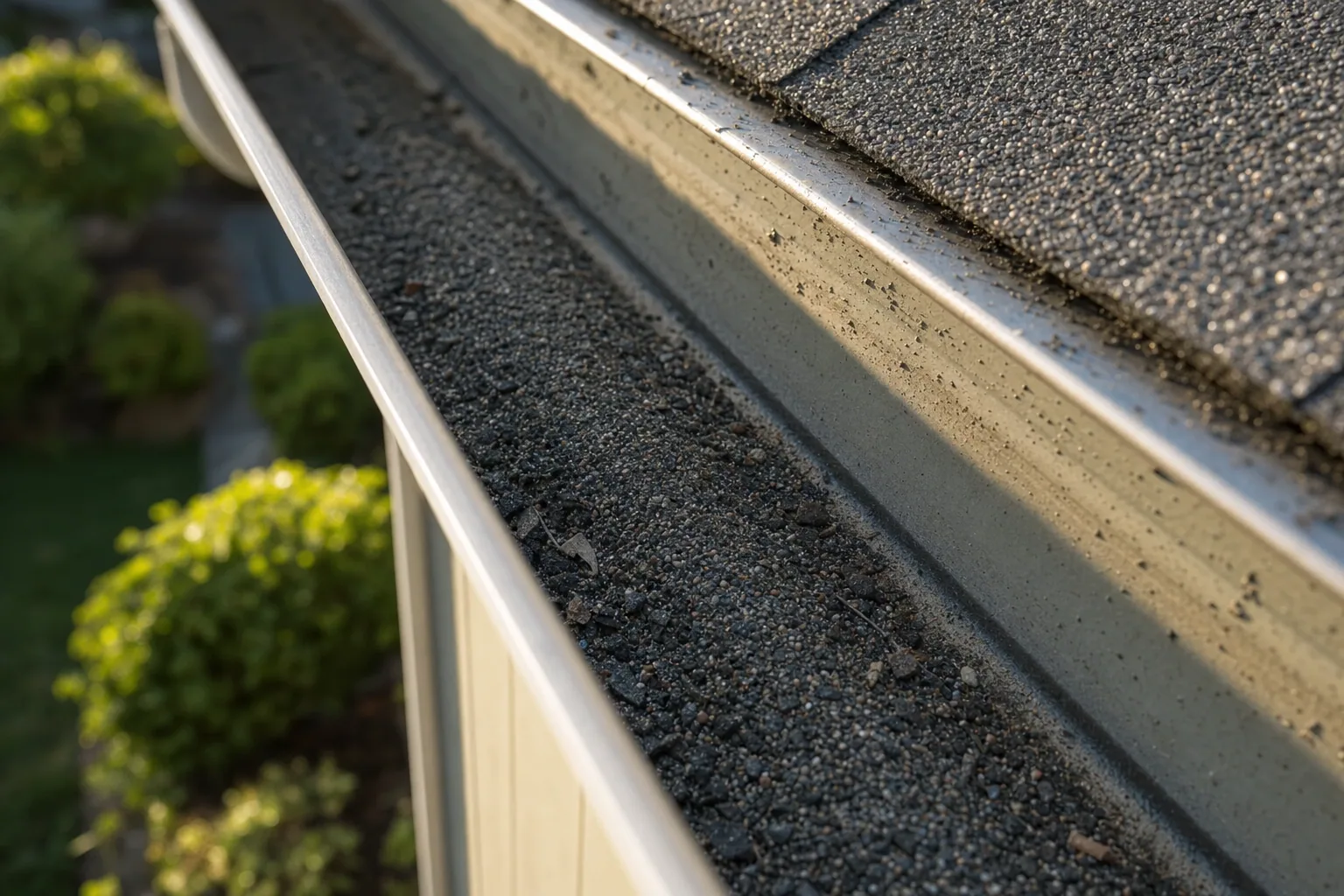
When you're cleaning your gutters or notice dark, sand-like particles accumulating in them, you might be looking at roof granules. These tiny specs are actually an important indicator of your roof's health. Understanding what they mean and when to take action can save you from costly water damage and premature roof failure.
What Are Roof Shingle Granules?
Asphalt shingles are made up of three main layers: a fiberglass or organic mat base, an asphalt coating, and a top layer of mineral granules. These granules serve several critical purposes. They protect the asphalt beneath from ultraviolet rays, which can degrade the shingle material and reduce its lifespan. They also give your roof its color and provide fire resistance. The granules create a textured surface that helps shed water and provides traction during maintenance.
Over time, these granules naturally wear away. A small amount of granule loss is completely normal. However, when you start finding roof granules in your gutters regularly or in large quantities, it's a signal that your roof may be deteriorating faster than it should.
Why Are Granules Ending Up in Your Gutters?
Granule loss happens for several reasons, and understanding the cause helps determine how urgent the problem is.
Normal aging is the most common culprit. Asphalt shingles are typically designed to last 15 to 25 years. As they age, the granules simply loosen and shed. If your roof is in this age range and you're seeing moderate granule loss, it's part of the natural lifecycle.
Severe weather can accelerate granule loss significantly. High winds strip granules away, while hail impacts dislodge them en masse. If you've experienced a recent storm with significant wind or hail, a sudden spike in roof granules appearing in your gutters is not unusual. After severe weather events, it's worth having a professional inspect for hidden storm damage that could compromise your roof's integrity.
Poor installation or low-quality materials can lead to premature granule loss. If your roof wasn't installed properly or if budget shingles were used, granules may shed faster than expected.
Excessive heat and UV exposure accelerate the breakdown of asphalt, causing granules to loosen more quickly. Roofs in full sun all day experience more granule loss than those with partial shade.
Improper ventilation in your attic can trap heat and moisture, cooking the underside of your shingles and causing them to deteriorate faster. Poor attic ventilation essentially shortens your roof's life.
How Much Granule Loss Is Normal?
The key is knowing the difference between normal wear and a red flag.
- Minimal granule loss: A handful of granules during gutter cleaning is typical and nothing to worry about.
- Moderate granule loss: Finding a small cup's worth of granules after a season or two suggests your roof is aging but probably still has some life left.
- Excessive granule loss: Discovering granules after every rain, or large visible areas of the shingle base showing through the granule coating, means your roof needs professional evaluation soon.
- Sudden significant loss: A sudden jump in granules, especially after a storm, warrants immediate inspection to rule out damage that could lead to leaks.
If you're unsure whether the amount you're seeing falls into the "normal" or "concerning" range, a professional roof inspection removes the guesswork.
The Real Risk: What Happens When Granules Are Gone
When granules wear away, the asphalt underneath becomes exposed to the sun and elements. Without that protective layer, the asphalt becomes brittle, cracks develop, and leaks become inevitable. A roof that's lost significant granule coverage is no longer effectively protecting your home from water damage.
This isn't just about a few wet spots in the attic. Undetected roof leaks can lead to mold growth, structural decay in your framing, rot in your decking, and damage to insulation and interior walls. By the time you notice water stains on your ceiling, the damage inside may already be substantial and expensive to repair.
Additionally, your homeowners insurance may deny claims if your roof has deteriorated to the point of obvious neglect. Staying on top of roof condition helps maintain insurance validity and protects your coverage when you really need it.
When to Call a Professional
If you're noticing roof granules in your gutters regularly, schedule a professional roof inspection. Trifecta Roofing and Restoration serves Tulsa and the surrounding areas with thorough roof evaluations that identify aging, wear, storm damage, and any vulnerabilities before they become expensive problems.
A professional inspection will tell you:
- How much useful life remains in your current roof
- Whether granule loss is within normal range or accelerated
- If there's underlying damage from storms or weathering
- Whether repair or replacement makes more financial sense
- What to expect in terms of timeline and cost
If your roof is less than 10 years old and you're seeing significant granule loss, that's especially worth investigating. It could indicate a manufacturing defect, installation issue, or hidden weather damage that's not yet visible from the ground.
Taking Action Before It's Too Late
Roof granules in your gutters are a gentle warning system your home provides. When you see them accumulating, take it as a prompt to assess your roof's condition rather than a cause for panic.
If your roof is 15 years or older with moderate granule loss, plan for replacement in the next few years. If you're seeing excessive loss on a younger roof, or if you've experienced major storms recently, don't delay getting a professional evaluation. The cost of inspection is far less than the cost of repairing water damage or dealing with a complete roof failure during a heavy rain.
Trifecta Roofing and Restoration combines expertise with transparent communication to help Tulsa homeowners make informed decisions about their roofs. Whether you need peace of mind that everything is fine or you need a repair or replacement plan, a no-obligation inspection is the first step. Contact us today to schedule your free roof assessment and protect your home from preventable damage.