

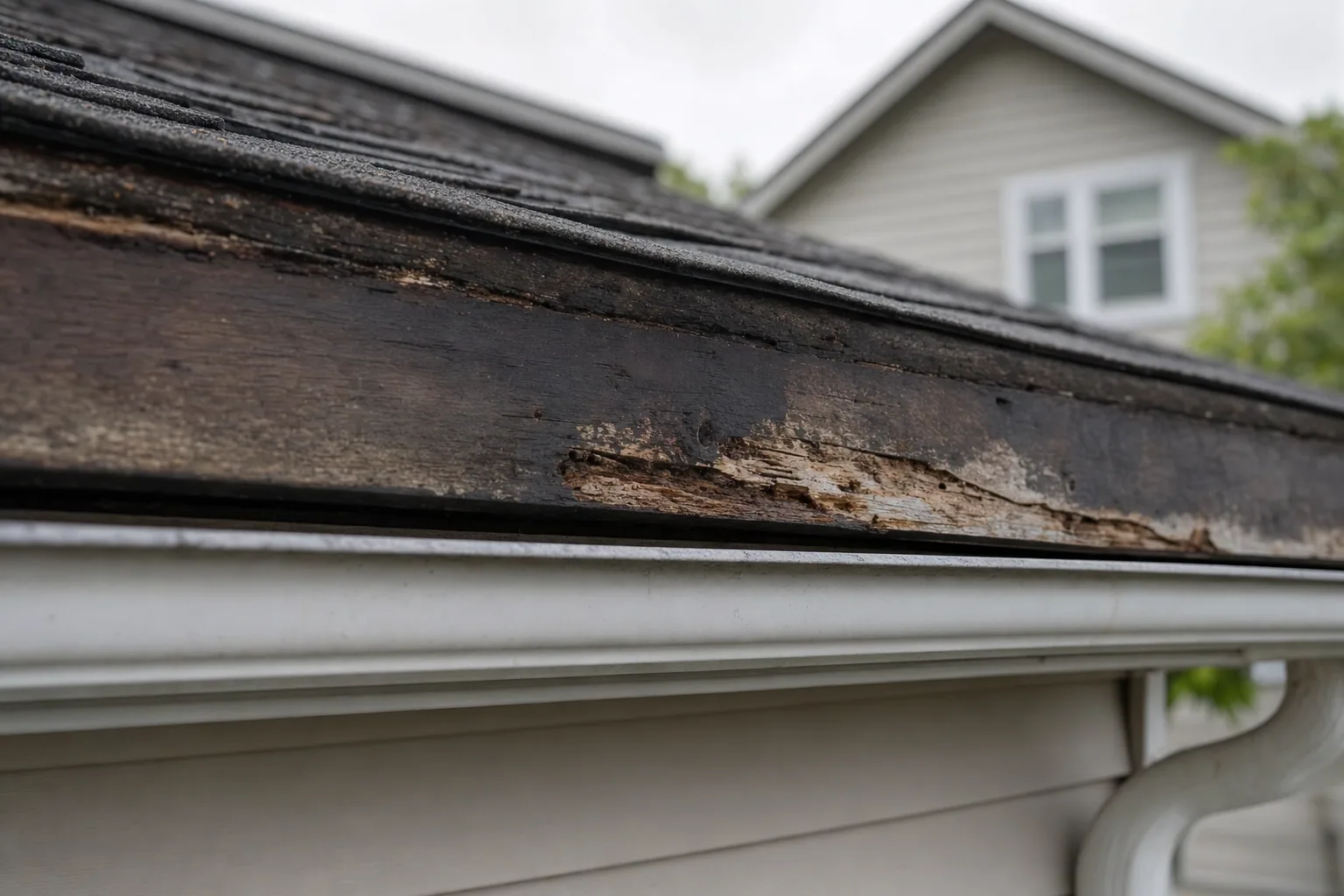
Your fascia boards may not be the most glamorous part of your home's exterior, but they are absolutely critical to protecting everything underneath. These horizontal boards run along the edge of your roofline and support your gutters, preventing water from damaging your siding, foundation, and interior framing. When fascia rot sets in, you face a decision: patch the problem or replace the boards entirely. Understanding the difference between fascia board repair and fascia replacement cost can save you money and headaches down the road.
What Fascia Boards Do and Why They Rot
Fascia boards serve as a protective barrier between your gutters and the rest of your home's structure. They attach to the ends of your roof rafters and create a clean, finished look along the roofline. More importantly, they channel water away from vulnerable areas and prevent pests from entering gaps in your framing.
Fascia rot develops when these boards are repeatedly exposed to moisture. Common causes include:
- Clogged or improperly installed gutters that allow water to back up behind the fascia
- Missing or damaged gutters that direct water directly onto the wood
- Inadequate roof ventilation that traps moisture
- Poor drainage around the foundation that wicks moisture upward
- Natural weathering and UV exposure over decades
Once water penetrates the wood grain, it creates an ideal environment for fungi and decay. Wood-eating insects like carpenter ants may follow, accelerating the damage. In Tulsa's climate, where seasonal storms and humidity are common, fascia rot can progress quickly if left unaddressed.
How to Spot Rotted Fascia
Early detection is your best defense against expensive repairs. Look for these warning signs:
- Soft or spongy wood when you press on the fascia
- Dark stains, discoloration, or a wet appearance
- Paint that is peeling, bubbling, or separating from the wood
- Visible cracks, splits, or gaps in the board
- A musty smell near the roofline
- Sagging gutters that no longer hang straight
- Water stains on your siding or soffit directly below the damaged area
If you notice any of these signs, it is worth scheduling a professional inspection. The team at Trifecta Roofing and Restoration can assess the extent of the damage and recommend the right solution for your home.
Fascia Repair: When It Makes Sense
Minor rotted fascia damage can sometimes be addressed through targeted repair. Repair is most effective when:
- Rot is isolated to a small, clearly defined section of the board
- The damage does not extend more than one or two feet in length
- The structural integrity of the board is still sound
- Rot has not spread to the underlying rafters or soffit
- Budget constraints require a short-term solution
A typical fascia repair involves cutting away the affected section, treating the wood with a wood hardener or epoxy filler, and patching the area with matching materials. The repair is then sealed and painted to match the surrounding fascia.
Repair tends to be faster and less expensive than replacement. However, repairs are only a temporary fix. If the underlying cause of the moisture is not addressed, rot will likely return in the same spot or nearby areas within a few years.
Fascia Replacement: The Long-Term Solution
Full fascia replacement is the more comprehensive approach. It makes sense when:
- Rot spans a significant length of the board (more than three feet)
- Damage is deep or structural, affecting the ability to support gutters
- Rot has already returned after a previous repair
- The fascia is over 20 years old and showing widespread wear
- Moisture problems suggest ongoing risk to the entire roofline
Replacement involves removing the old fascia board, inspecting the rafter ends for damage, addressing any moisture sources, and installing new fascia in the same or upgraded material. Modern fascia options include aluminum, vinyl, and fiber cement, each with different price points and durability levels. Many homeowners choose to upgrade to a more weather-resistant material that will not rot again.
While replacement is a larger initial investment, it eliminates the rot problem completely and provides peace of mind for decades. It also creates an opportunity to improve your home's insulation and drainage if needed.
Fascia Replacement Cost and Budget Considerations
Cost depends on several factors:
- Board length: Total linear feet of fascia that needs replacement
- Material choice: Aluminum is typically less expensive than fiber cement; wood is a middle option
- Gutter involvement: Whether gutters need to be removed and reinstalled
- Rafter damage: If rafters are rotted, repair or replacement adds to the bill
- Accessibility: Steep or high rooflines may require additional equipment and labor
A single-story home with 150 linear feet of damaged fascia might cost anywhere from a few hundred dollars for a patch repair to several thousand dollars for a complete replacement with new gutters and rafter repairs. The key is to get quotes from reputable contractors and understand what is included in each estimate.
When evaluating fascia replacement cost, remember that this is preventive maintenance for your entire home. Water intrusion from a failed fascia can lead to roof leaks, siding damage, and foundation problems that cost far more to fix than the fascia itself.
Making the Repair vs. Replace Decision
Here is a simple framework to help you decide:
- Have a professional assess the damage and identify the source of moisture
- Ask whether the rot is likely to return and how quickly
- Compare the cost of repair to the cost of replacement
- Consider the age of your roof and fascia
- Think about your long-term plans for the home
If you are planning to stay in your home for another ten years or more, replacement is almost always the smarter choice. If you are selling soon or on a tight budget, repair might buy you time. But if the rot is extensive or keeps coming back, you will eventually choose replacement anyway. It is better to do it right the first time.
When to Call a Professional
Fascia repair and replacement are not ideal DIY projects. The work takes place on a ladder or roof, requires proper fall protection, and demands precision to avoid water leaks. A poor installation can cause bigger problems than the original rot.
Trifecta Roofing and Restoration has extensive experience repairing and replacing fascia boards as part of comprehensive roofline protection. We combine expertise with a dedication to quality, using top-grade materials and transparent communication to ensure your home remains safe and sound. Whether you need a small patch or a complete fascia overhaul, we assess your specific situation and recommend the solution that makes the most sense for your home and budget.
If you have noticed soft fascia boards, sagging gutters, or water stains along your roofline, do not wait. Contact Trifecta today for a free inspection and honest assessment of your fascia condition.