

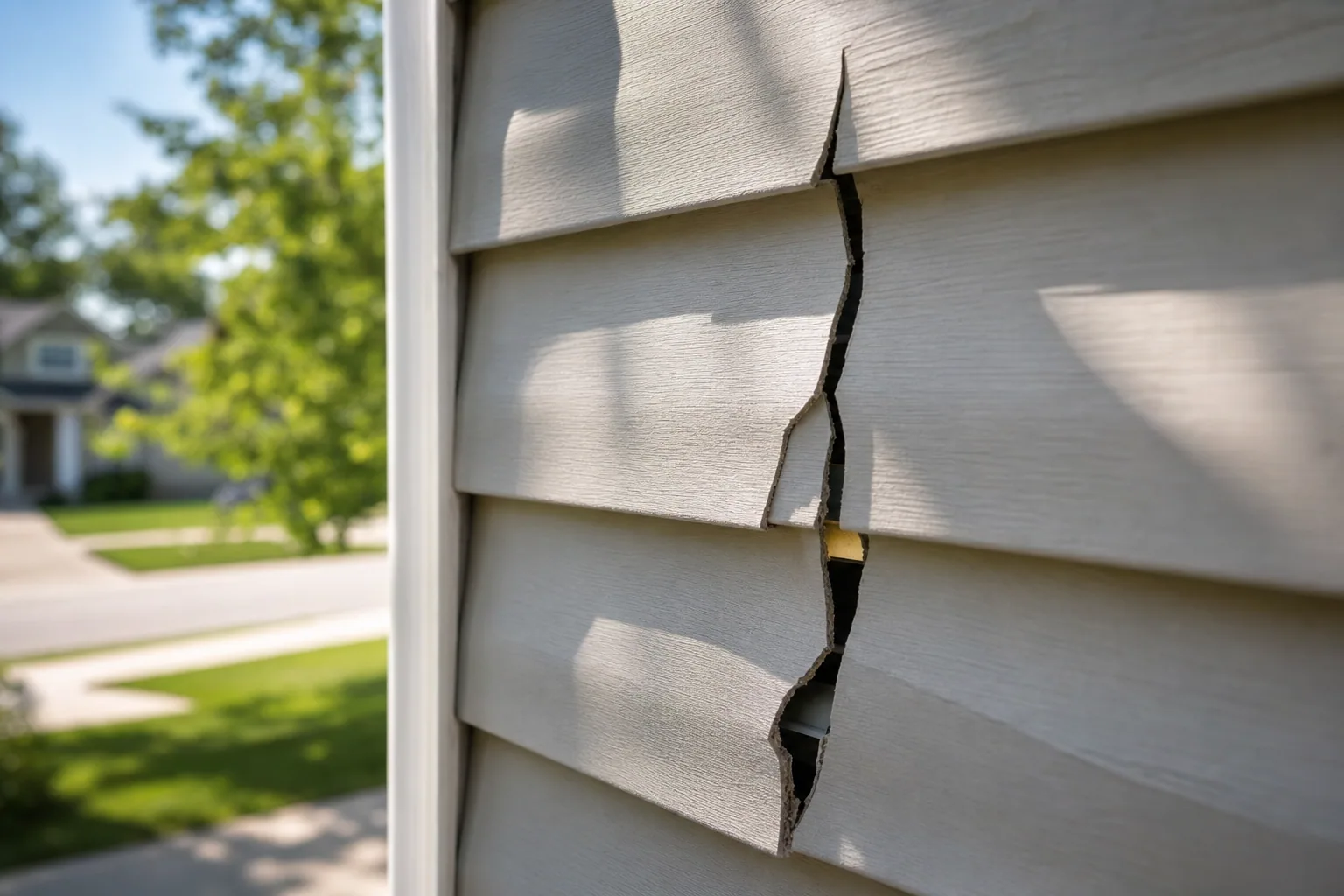
Cracked siding repair is one of the most common exterior maintenance issues homeowners face. Whether you have small stress fractures or significant separation between panels, understanding your repair options early can save you thousands in water damage and structural decay down the road.
When siding fails, water finds its way behind the protective barrier your exterior is supposed to provide. Inside walls, moisture feeds mold, rots wooden framing, and compromises your home's integrity. The good news: most siding cracks and separation are fixable without a full replacement, and catching them early makes a real difference.
How Siding Cracks and Separation Happen
Siding cracks and separation occur for several predictable reasons:
- Temperature fluctuations: Vinyl and other materials expand and contract with seasonal temperature swings. Tulsa's hot summers and cold winters stress siding panels year after year.
- Foundation settling: As your home ages and the foundation shifts slightly, siding panels that were once snug can pull apart or develop stress fractures.
- Impact damage: Wind-driven hail, flying debris from storms, or even accidental impacts from ladders or lawn equipment crack panels.
- Poor initial installation: Panels that were installed too tightly or without proper room for expansion are prone to cracking as they age.
- Aging and UV exposure: Vinyl becomes brittle over time. Sun exposure weakens the material, making it more susceptible to cracking from wind or temperature changes.
Identifying the root cause matters because it tells you whether a simple repair will hold or if the underlying problem needs addressing.
Identifying Cracks Before They Become Costly
Regular inspection is your first line of defense. Walk around your home's perimeter every few months and look for:
- Fine hairline cracks in individual panels
- Gaps between panels where they should overlap or meet
- Panels that are visibly bowed or pulled away from the wall
- Water stains or dark marks near cracks, indicating moisture penetration
- Soft spots or sponginess when you gently press on the siding
Small cracks that you catch early are much easier and cheaper to address. Once water gets behind the siding and begins rotting the sheathing or insulation, your repair becomes a full-scale restoration project.
Repair Option 1: Caulking and Sealing Small Cracks
For hairline cracks and minor gaps, professional caulking is often the first step. This works best when:
- The crack is less than 1/4 inch wide
- The damage is superficial and doesn't extend through the panel
- Separation is minimal and panels are still securely fastened
A quality exterior caulk rated for your siding material (vinyl, fiber cement, or wood) fills the gap and prevents water infiltration. The caulk remains flexible as temperature changes occur, so it won't re-crack immediately. This approach costs significantly less than panel replacement and can extend the life of your siding by several years if done correctly.
The catch: caulking is a temporary fix for problems caused by foundation movement or serious installation flaws. If the underlying issue persists, the crack will return.
Repair Option 2: Panel Replacement
When cracks are large, panels are severely separated, or water has already penetrated behind the siding, replacing individual panels is the next logical step. This approach:
- Preserves the majority of your existing siding
- Lets you address localized damage without a full exterior overhaul
- Costs far less than complete siding replacement
- Maintains a consistent appearance if you match the original material and color
Panel replacement works best for vinyl, fiber cement, and engineered wood siding because individual panels can be unhooked or unbolted and swapped out. Your contractor removes the damaged panel, inspects the sheathing and insulation underneath for moisture damage, makes repairs to the structure if needed, and installs a matching panel.
Trifecta Roofing and Restoration specializes in siding repair and replacement. Whether your preference is vinyl, steel, aluminum, wood, or engineered wood siding, we ensure your complete satisfaction and use top-grade materials to guarantee the repair holds up.
Repair Option 3: Patching Gaps and Separation
When panels separate at seams or corners but the panels themselves remain intact, targeted patching can seal the problem. Your contractor might:
- Apply flexible flashing or trim to bridge gaps and direct water away
- Reinstall panels with proper fastening and spacing to allow for expansion
- Install J-channel or undersill trim to support and seal vulnerable edges
- Add backer rod and caulk to seal any remaining gaps
This approach costs more than simple caulking but less than full panel replacement. It's especially useful after settling or wind damage that has loosened fasteners or shifted panels slightly out of alignment.
When Repair Becomes Replacement
There are situations where patching or replacing a single panel won't solve the problem:
- Water damage has rotted the sheathing or framing behind multiple panels
- Cracks recur in the same location despite previous repairs
- Foundation settling or structural movement is ongoing
- The siding is so old that matching materials are unavailable
- Pest damage or infestation has compromised structural integrity
In these cases, a full or partial siding replacement makes sense. Trifecta can assess the extent of damage and recommend whether targeted repair or broader replacement better protects your home long-term.
Protecting Your Home from Future Cracks
Once you've repaired cracked siding, prevent the problem from recurring:
- Ensure gutters and downspouts are clean and properly direct water away from the foundation
- Maintain adequate drainage around your home to minimize foundation stress
- Apply a UV-protective sealant to vinyl siding every few years to keep it flexible
- Trim tree branches that hang over your roof to reduce impact risk during storms
- Have your siding inspected annually and after major weather events
Small, preventive measures catch new damage early before it becomes expensive. Regular maintenance extends the life of your siding and keeps water out of your walls.
Get Professional Help for Cracked Siding
While small cracks might seem minor, they represent a breach in your home's first line of defense against moisture. Water damage, structural decay, and pest infestations all begin where siding fails. The longer you wait to address cracks and separation, the more extensive and costly the repairs become.
Trifecta Roofing and Restoration works to halt structural decay, boost energy efficiency, and avert pest infestations with high-quality siding solutions. Our team combines expertise with a dedication to quality, ensuring your home remains safe and sound. We'll inspect your siding, explain exactly what you're dealing with, and recommend the repair approach that makes the most sense for your home and budget.
Reach out today for a free consultation and get your siding cracks assessed by local Tulsa experts you can trust.