

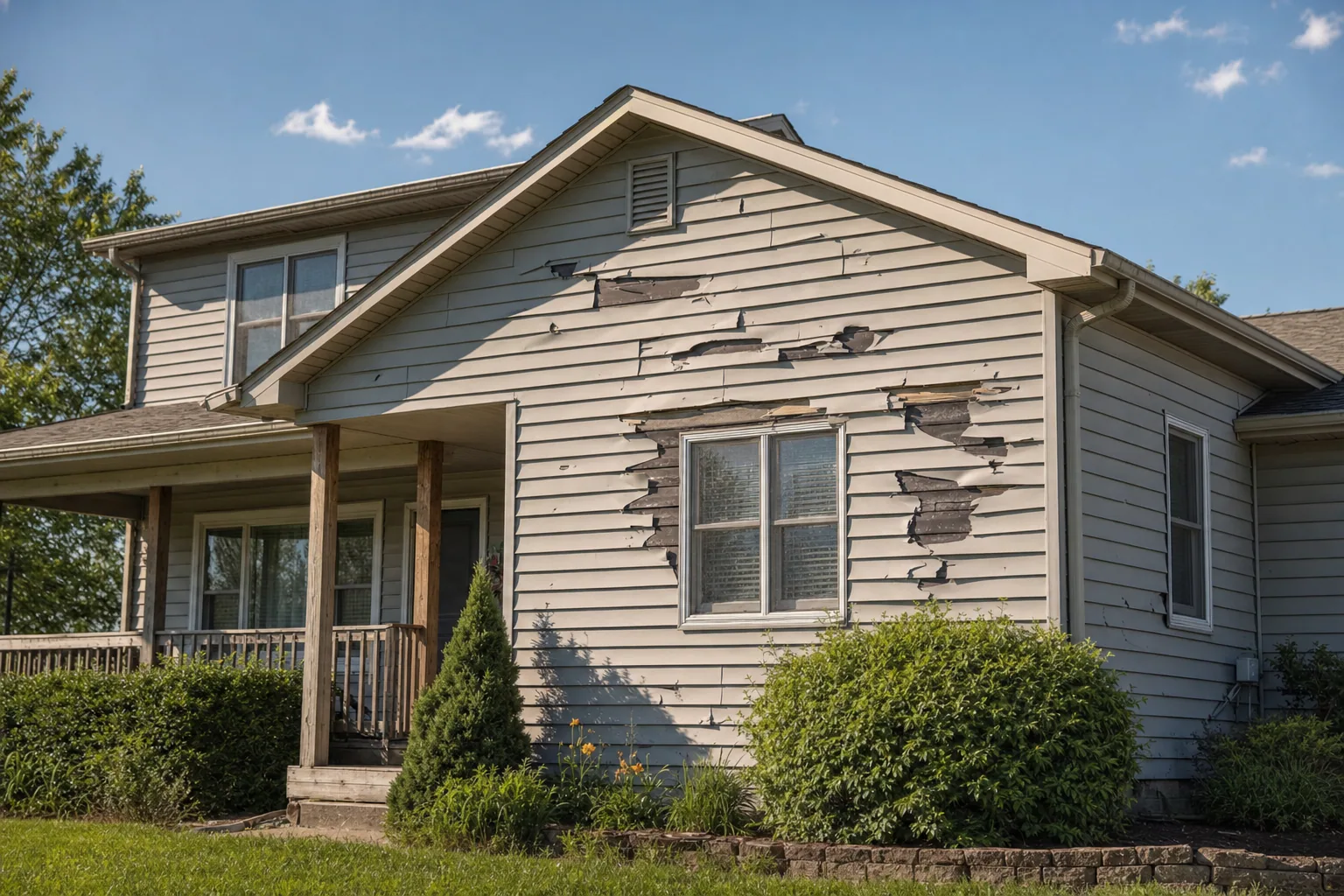
After a severe windstorm or hail event sweeps through Tulsa, your home's first line of defense against the elements is your siding. Yet many homeowners don't realize how much damage wind and hail can inflict until water starts seeping into walls or they notice visible gaps and cracks.
Understanding how to assess siding damage from wind storms is critical. Early detection can mean the difference between a simple repair and a complete structural restoration. This guide will walk you through what to look for, why it matters, and when to call in the professionals at Trifecta Roofing and Restoration.
What Wind and Hail Do to Siding
Wind and hail don't just dent the surface of your siding. They can crack panels, force them apart at the seams, bend or warp the material, and dislodge fasteners that hold everything in place. Even if your siding looks relatively intact from the street, hidden damage lurks behind where water can begin its slow invasion into your home's framing and insulation.
Hail damage to siding often appears as small to large dents, divots, or impact marks that weaken the structural integrity of each panel. Wind damage to siding typically manifests as lifted, separated, or torn sections, especially along edges and corners where wind force concentrates.
The real danger is what happens next. Once water gets behind compromised siding, it accelerates structural decay, promotes mold growth, and compromises your home's energy efficiency. That's why catching the damage early matters so much.
Visual Signs of Storm Damage
Start your assessment from the ground and work upward. Look for these common indicators:
- Cracked or split panels running vertically or horizontally
- Dents, dimples, or impact marks across multiple sections
- Gaps or separation where panels meet at seams or corners
- Loose, lifted, or buckled siding that pulls away from the house
- Missing or damaged fasteners, clips, or nails
- Paint peeling, fading, or blistering in isolated areas that weren't sun-exposed
- Visible rot, mold, or discoloration where water may have infiltrated
- Sagging sections that suggest moisture saturation inside the walls
Pay close attention to areas your roof protects less, such as the south and west-facing sides of your home. These typically bear the brunt of high-wind and hail impacts. Also examine corners, eaves, and the transitions between different roofing or architectural elements, where damage concentrates.
Checking for Hidden Water Damage
Visible dents and cracks tell only part of the story. After any significant storm, you should also inspect the interior of your home for water damage signs. Look in your attic, basement, and crawl spaces for:
- Wet insulation or damp wood framing
- Stains on interior walls or ceilings
- Peeling wallpaper or paint indoors
- Musty odors that suggest mold growth
- Soft or spongy areas on walls when pressed
If your siding sustained moderate to severe damage, moisture almost certainly has penetrated beyond the outer layer. Acting quickly to repair or replace damaged sections prevents exponentially higher repair costs down the road.
When to Call a Professional Inspector
While a careful homeowner can spot obvious damage, a professional assessment from Trifecta Roofing and Restoration reveals damage you might miss. Our team knows exactly what to look for, where problems hide, and whether damage is cosmetic or structural.
You should request a professional inspection if:
- Your area experienced winds exceeding 40 mph or significant hail
- You've noticed any visible cracks, dents, or separation in your siding
- You see water stains, mold, or dampness inside your home
- Your siding is more than 15 years old (age makes it more vulnerable)
- Your homeowner's insurance recommended an inspection
Most people call us for siding damage assessment after a major storm. We work with most insurance claims to make the process seamless and cost-effective, managing everything from documentation to negotiation so you don't have to shoulder the stress alone.
Insurance Claims and Documentation
If you plan to file an insurance claim for your siding damage, documentation is essential. Take clear photos and videos of all visible damage from multiple angles in good lighting. Note the date of the storm, wind speed if reported locally, and any hail size estimates if available.
When Trifecta Roofing and Restoration assesses your siding damage, we provide detailed documentation that insurance companies respect. Our expertise in navigating claims means your coverage is maximized, and you're not left paying out of pocket for damage the storm caused.
Repair vs. Replacement
Siding damage repair depends on extent and location. Small isolated cracks or a few dented panels may warrant targeted repair. However, widespread damage across multiple sections, or damage compromising the weathertight seal, often calls for full siding replacement.
Our siding solutions halt structural decay, boost energy efficiency, and avert pest infestations, all while promoting healthier living spaces. Whether we repair individual panels or recommend a complete system replacement, we use top-grade materials and proven techniques to deliver results that stand the test of time.
Taking Action After a Storm
Time is your enemy after storm damage. The longer water sits behind your siding, the more structural decay advances. If you've experienced wind or hail in Tulsa or the surrounding areas, don't wait for the problem to worsen.
Trifecta Roofing and Restoration is here to restore your home with precision and care. We'll assess your siding damage thoroughly, handle your insurance claim, and get your property safe and secure again. Most of our customers come to us through word-of-mouth because they trust our transparent communication, reliable craftsmanship, and commitment to quality throughout every project.
Reach out today for a free consultation and get your siding damage assessed by local experts who understand Tulsa's weather challenges and know your home's unique needs.