

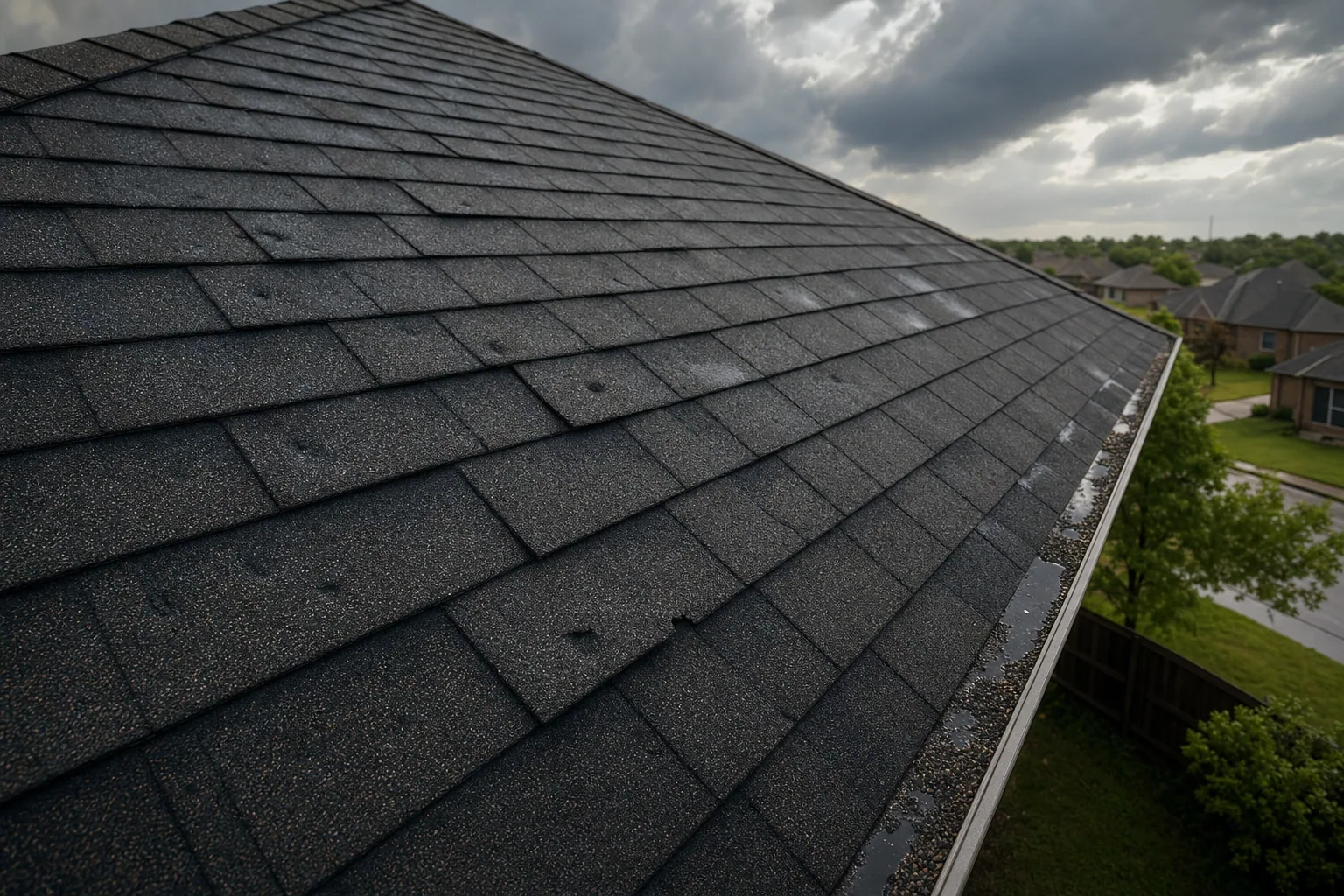
After a major hail event or windstorm rolls through Tulsa, most homeowners walk outside, look up, and think everything looks fine. No missing shingles. No gaping holes. No water pouring through the ceiling. So they move on.
That assumption costs people thousands of dollars every year.
Hidden storm damage is one of the most common and most expensive problems Tulsa-area homeowners face. The damage is real, it is spreading, and it is quietly weakening your roof while you go about your day. Knowing what to look for, and when to call a professional, can save you from a full replacement down the road.
What 'Hidden' Storm Damage Actually Means
Hidden storm damage does not mean your roof is completely undamaged on the surface. It means the damage is not obvious from the ground and not dramatic enough to catch your attention during a quick visual check. It tends to show up in three forms:
- Granule loss: Hail knocks the protective granules off asphalt shingles. The shingle looks mostly intact, but the granule layer that guards against UV rays and water is gone. From the street, you would never notice.
- Micro-fractures in shingles: Hail impact can crack the fiberglass mat inside a shingle without visibly splitting the surface. These fractures let water seep in slowly over time.
- Lifted or loosened shingles: High winds do not always tear shingles completely off. They can break the sealant bond and lift shingles just enough to let water drive underneath during the next heavy rain.
Each of these issues can go undetected for months. By the time a leak shows up inside your home, the damage is usually far worse than what you would have been dealing with if it had been caught early.
Warning Signs You Can Spot From the Ground
You do not need to climb on your roof to notice several early indicators. Walk around your home after any significant storm and look for these signs:
- Granules in the gutters or downspout discharge: After a hailstorm, check your gutters. A layer of dark, sandy granules collecting there is a strong signal that your shingles took a hit.
- Dented or bruised gutters and downspouts: If hail was large enough to dent metal gutters, it was large enough to damage your shingles. Gutters tell the story even when shingles do not look obviously harmed.
- Damaged fascia or siding: Storm damage rarely stops at the roof edge. If you see dings in your aluminum trim, cracks in vinyl siding, or chipped paint along the exterior, your roof likely caught some of the same punishment.
- Debris pileup around the foundation: Large amounts of shingle debris, torn flashing pieces, or granule buildup at your foundation can point to roof-level damage you have not seen yet.
If you notice any of these signs, it is worth getting a professional eye on your roof before filing or skipping an insurance claim.
Interior Warning Signs You Should Not Ignore
Sometimes the first clue shows up inside your home, not outside. These interior signs often indicate that water has already found a path through compromised roofing materials:
- Water stains on ceilings or upper walls: Brown or yellow staining, especially after a recent storm, suggests water is traveling through your roof deck or down a rafter.
- Peeling paint near the roofline: Moisture trapped under paint causes bubbling and peeling. If it is appearing near the top of your walls or on the ceiling near an exterior wall, suspect a roof issue first.
- Musty odor in the attic: Mold and mildew grow fast in a wet attic. A musty smell when you open the attic hatch is a red flag that moisture has been getting in, even if you have not seen a visible drip.
- Sagging drywall: If drywall in your ceiling feels soft or is beginning to bow, water has been pooling there for a while. This is a more advanced sign and typically means the damage is no longer hidden.
For Tulsa homeowners dealing with wind and hail, understanding what hail damage looks like on a home can help you connect these interior signs to the storm event that likely caused them.
Why Tulsa Storms Are Particularly Hard on Roofs
Tulsa sits in a region that sees frequent severe weather. Hail events, straight-line winds, and occasional tornado activity put roofs under serious stress on a regular basis. A storm that drops half-inch hail may not look threatening on the news, but it can strip enough granules from an aging roof to cut years off its lifespan.
Wind is equally sneaky. Gusts do not have to be catastrophic to break the sealant bond on shingles or lift flashing around chimneys and skylights. Once that bond breaks, every subsequent rainstorm drives water a little further under the shingle.
Preparing your home before storm season is one of the smartest things you can do. A quick read on how to prepare your roof for Tulsa's spring storms can help you understand what to check and when.
Why You Should Not Wait to Get an Inspection
Insurance policies have deadlines. Most carriers require you to report storm damage within a specific window, and waiting too long can give an adjuster reason to deny your claim on the grounds that the damage is too old or that deferred maintenance is to blame.
Beyond the insurance angle, minor damage compounds quickly. A small area of granule loss becomes accelerated shingle aging. A micro-cracked shingle becomes a leak pathway. A lifted shingle lets in wind-driven rain that saturates the roof deck, which then leads to rot, mold, and structural issues.
Getting an inspection after a major weather event is not an overreaction. It is practical homeownership.
What a Professional Inspection Actually Covers
A trained contractor looks at things that a quick ground-level check will never catch. At Trifecta Roofing and Restoration, an inspection covers the full roof surface, flashing points, ridge line, valleys, gutters, fascia, and soffits. The team checks for signs of impact, lifted materials, granule loss, and any area where water could be entering.
If storm damage is found, Trifecta Roofing and Restoration works directly with most insurance carriers to make the claims process as smooth and cost-effective as possible. As one past customer noted, working closely with the team resulted in insurance covering close to 95% of the project cost, far more than the initial quote from the adjuster.
The company holds a 4.9-star rating across more than 150 reviews and earned the 2025 Angi Super Service Award, built almost entirely on word-of-mouth recommendations from Tulsa homeowners who trusted them after a storm.
Take Action Before the Damage Grows
Hidden storm damage does not fix itself. The longer it sits, the more it costs. If your home has come through a recent hailstorm or windstorm and you are not completely certain your roof is intact, the safest move is a professional inspection.
Contact Trifecta Roofing and Restoration to request your free, no-obligation inspection. The team is local to Tulsa, knows the area's weather patterns, and will walk you through exactly what they find, no pressure, no guesswork.