

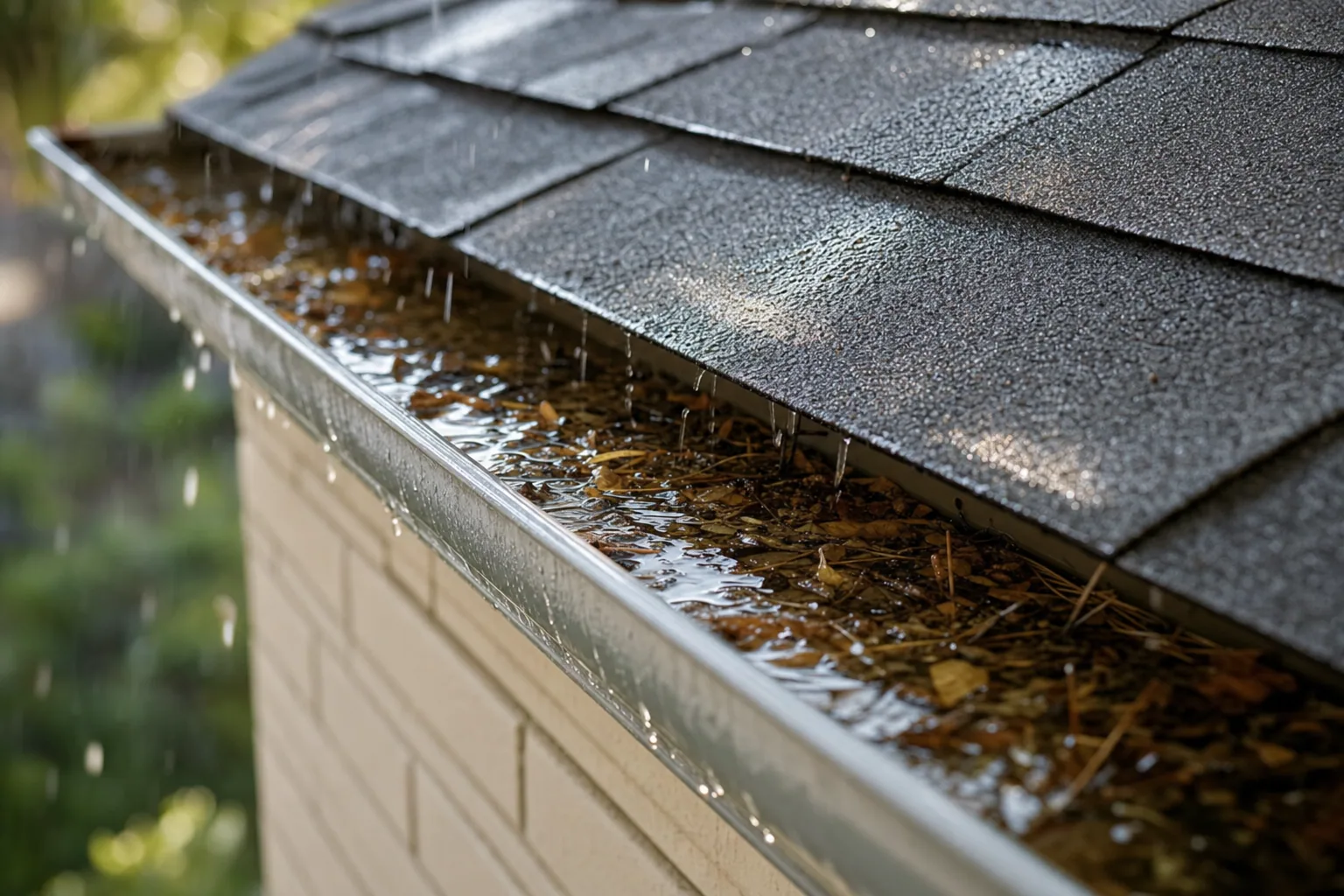
Standing water in gutters is a silent threat to your home. Many Tulsa homeowners overlook this problem until water damage becomes expensive and widespread. When gutters fail to drain properly, the consequences ripple through your roof, siding, foundation, and interior. Understanding why this happens and how to stop it can save you thousands in repairs.
Why Gutters Matter More Than You Think
Gutters serve one essential job: direct water away from your home. When they do their job well, they protect your roof, walls, foundation, and landscaping. But when standing water accumulates in your gutters, that protection breaks down entirely.
The problem compounds over time. Water sitting in a gutter becomes heavy. It pulls downward on fasteners and creates stress on the structure. Debris trapped in standing water begins to rot and decompose, blocking drainage even further. Leaves, dirt, and organic matter turn into a sludge that hardens, making clogs worse with each passing week.
Your roof flashing and fascia boards also suffer. Standing water seeps behind gutters and soaks into wood, triggering rot that spreads into your home's structural framing. Once decay starts, it becomes invisible but relentless, eating through wood fiber by fiber until repairs cost thousands instead of hundreds.
How Clogged Gutters Lead to Water Damage
Clogged gutters cause water to overflow during rain or melting snow. Instead of flowing down the downspout and away from your foundation, water spills over the gutter edge. It runs down your siding, pools around your foundation, and finds its way into your basement or crawl space.
Water damage from clogged gutters takes many forms:
- Basement flooding and foundation cracks from pressure and seepage
- Mold growth inside walls, attics, and crawl spaces
- Rotted siding and fascia boards that weaken your exterior
- Damaged landscaping and eroded soil around your foundation
- Compromised structural integrity if rot spreads unchecked
Once water gets inside, the repair bill grows fast. Water damage often leads to mold remediation, framing replacement, flooring restoration, and interior repainting. A problem that started with leaves in a gutter can end up costing $10,000 or more.
Gutter Clog Prevention Starts with Regular Cleaning
The first line of defense is consistent maintenance. Cleaning your gutters twice a year, ideally in spring and fall, prevents most clogs before they start.
Here's what to do:
- Remove leaves and debris by hand or with a gutter scoop, working from one end toward the downspout
- Flush the gutter with a garden hose to clear remaining dirt and confirm water flows freely
- Check that downspouts direct water at least 5-6 feet away from your foundation
- Look for standing water after heavy rain and address any areas that don't drain
- Inspect for rust, holes, or sagging sections that need repair or replacement
If you notice standing water in your gutters even after cleaning, the problem runs deeper. Gutters may be sagging or improperly pitched. A gutter installed without enough slope will trap water no matter how clean you keep it. This is where professional help makes a real difference.
Trifecta Roofing and Restoration can assess whether your gutters are sized and installed correctly for your home and local rainfall patterns. Proper gutter installation prevents water from pooling in the first place, protecting your entire exterior system.
Gutter Overflow Problems and Long-Term Consequences
Gutter overflow happens fast. Heavy rain on a clogged system means water spills over within minutes. If you've ever watched water cascade over a gutter during a downpour, you've seen the problem in action.
Overflow creates two problems at once. First, water that should be safely channeled away is now flooding your foundation perimeter. Second, the excess weight strains your gutter system, pulling fasteners loose and warping the gutter itself.
Over time, repeated overflow causes permanent damage:
- Foundation settling and cracking from water intrusion
- Basement walls becoming damp or wet
- Soffit and fascia rot from chronic water exposure
- Landscape erosion that destabilizes your property
- Interior damage if water reaches living spaces
Preventing overflow means keeping gutters clear, ensuring proper slope for drainage, and sizing gutters appropriately for Tulsa's heavy spring and summer rains.
When to Call a Professional
Some gutter maintenance you can handle yourself. But certain situations demand professional attention right away.
Call a specialist if you notice:
- Standing water sitting in gutters even after cleaning
- Gutters that sag or pull away from the roofline
- Holes, rust, or visible damage to gutter metal
- Water stains on your fascia or soffit
- Basement moisture or mold growth
- Downspouts that don't extend away from your foundation
Trifecta Roofing and Restoration has helped countless Tulsa homeowners fix gutter problems before they became catastrophic water damage. The team uses top-grade materials and proven installation techniques to ensure gutters drain properly year-round. Whether you need gutter repair, replacement, or just a professional inspection, they work to prevent water damage and maintain your home's integrity.
Protecting Your Home Starts Now
Standing water in gutters may seem like a minor annoyance, but it's the beginning of a chain reaction that ends in expensive repairs. Gutter clog prevention through regular cleaning and proper maintenance is the simplest way to protect your home.
If you're seeing standing water, overflow problems, or any signs that your gutters aren't draining, don't wait. The longer water sits, the more damage it does. A quick professional inspection now can identify problems before they spread into your roof, siding, and foundation.
Reach out to Trifecta Roofing and Restoration for a free consultation. As your local Tulsa exterior contractor, we understand the specific drainage challenges your home faces and can recommend solutions that protect your investment for years to come.