

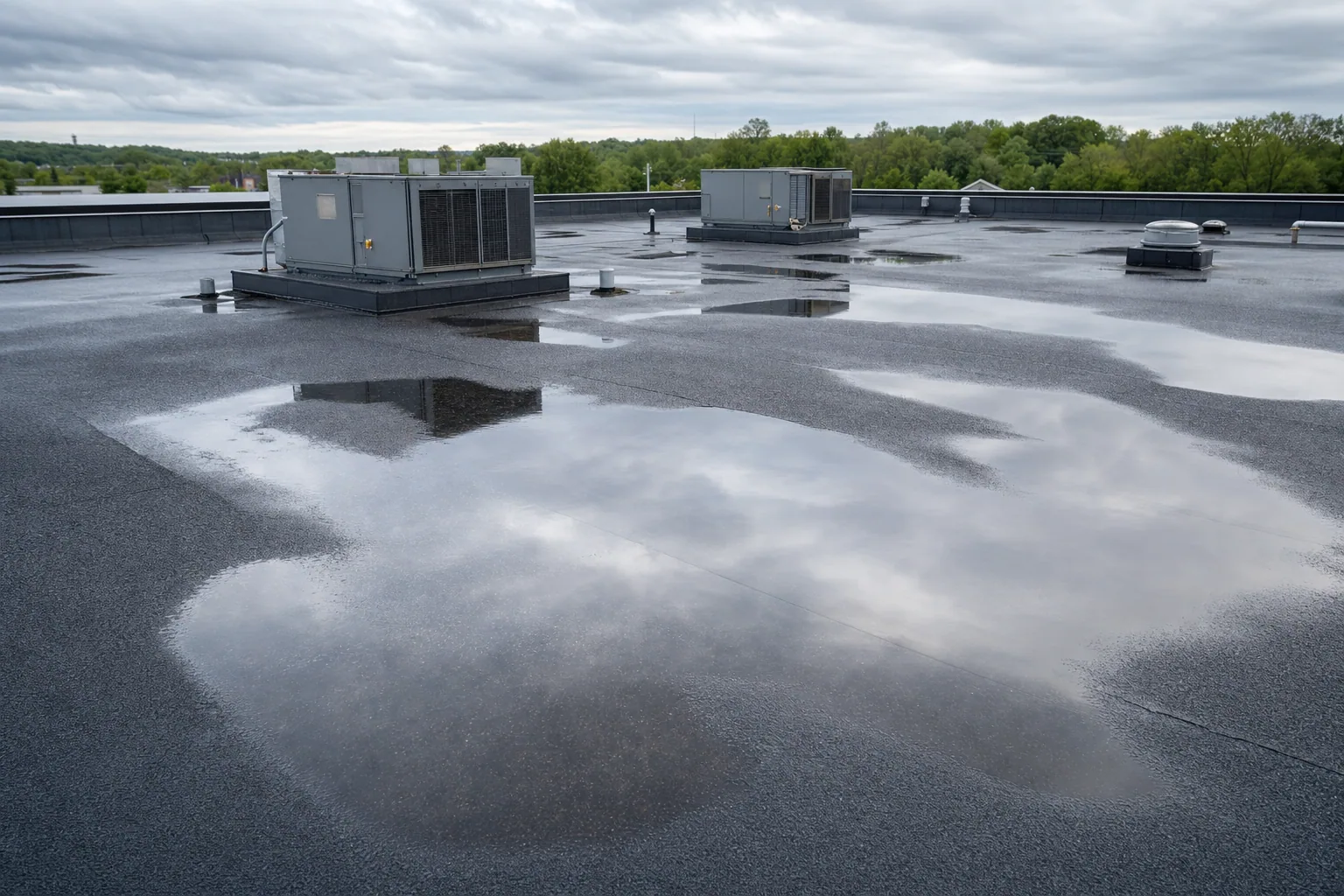
Standing water on a flat roof is more than just an eyesore. Pooling water creates serious risks for your Tulsa home or business, including foundation damage, mold growth, and premature deterioration of roofing materials. Understanding what causes flat roof water ponding and how to fix it can save you thousands in repairs down the road.
Why Flat Roofs Are Prone to Standing Water
Flat roofs are popular because they offer space for equipment, solar panels, or outdoor areas. However, their design creates a critical vulnerability: water drainage is much slower than on pitched roofs. Gravity alone cannot move water off a completely flat surface the way it does on an angled roof.
When rain falls on a flat roof, the water should flow toward gutters and downspouts. But if the roof has even slight sagging, poor slope, or clogged drainage systems, water sits in pools instead. This standing water on roof surfaces happens more often than many homeowners realize, especially in climates like Tulsa's where heavy storms bring significant rainfall.
Flat roofs also tend to accumulate debris: leaves, dirt, gravel from the roofing material itself. This buildup blocks water from reaching drainage points, trapping moisture and forcing it to sit longer on the membrane.
Common Causes of Roof Drainage Problems
Identifying why water is pooling on your flat roof is the first step toward fixing it. Here are the most frequent culprits:
-
Inadequate Roof Slope: Many flat roofs are not truly flat. Building codes require at least a 1/8-inch slope per foot of roof length to promote drainage. If your roof was installed without proper pitch, water will pool.
-
Settling and Structural Sagging: Over time, roof decks settle unevenly. Areas that dip lower become natural catch basins for water, creating standing puddles that grow larger with each rain.
-
Clogged Gutters and Downspouts: Leaves, dirt, and roof gravel accumulate in drainage systems. When gutters overflow or drains back up, water has nowhere to go except to pool on the roof surface.
-
Damaged or Deteriorated Roofing Membrane: Older flat roofs develop cracks, blisters, and thin spots. The membrane loses its ability to shed water efficiently, and degraded material can actually trap moisture.
-
Roof Penetrations and Flashing Issues: HVAC units, vents, and pipes create openings in the membrane. Poor flashing around these penetrations can divert water toward low spots rather than away from them.
-
Blocked Internal Drains: Some flat roofs use interior drain systems rather than gutters. When these drains become plugged with debris, water backs up and pools across the entire roof.
The Risks of Allowing Standing Water to Persist
Leaving water pooling on your flat roof is never a safe choice. Prolonged standing water accelerates deterioration of the membrane, leading to leaks that compromise your building's interior. Water intrusion causes mold growth, damaged insulation, and structural rot that compounds over time.
Standing water also adds weight to your roof structure. While flat roofs are engineered to handle normal loads, extended ponding of water creates additional stress that can lead to costly structural problems. Additionally, stagnant water becomes a breeding ground for mosquitoes and other pests during warm months.
How to Fix Standing Water on Your Flat Roof
The solution depends on the underlying cause, but here are the most effective approaches:
Clean Out Drainage Systems
Start by clearing gutters, downspouts, and interior drains of all debris. Remove leaves, dirt, gravel, and any other buildup blocking water flow. This alone often resolves minor pooling issues and costs far less than structural repairs.
Improve Roof Slope
If water continues to pool after cleaning, your roof may lack adequate pitch. Adding a tapered layer of insulation or lightweight concrete can create the necessary slope toward drains. This is more cost-effective than replacing the entire roof deck and restores proper drainage immediately.
Patch or Replace the Roofing Membrane
If the membrane itself is deteriorated, damaged areas must be sealed or patched to prevent water penetration. In some cases, a full membrane replacement is necessary. Trifecta Roofing and Restoration uses top-grade materials and proven techniques to ensure your flat roof prevents water damage and maintains proper drainage for years to come.
Install or Repair Flashing
Flashing around roof penetrations must be inspected and repaired if damaged. Poor flashing redirects water toward low spots rather than away from them, making ponding worse. Professional flashing repair ensures water is directed safely toward drainage points.
Consider Interior Drain Maintenance
If your flat roof uses internal drain systems, regular maintenance is critical. Have drains inspected and cleaned twice yearly, especially before and after heavy rain seasons. Clogged drains are one of the easiest problems to fix but the easiest to ignore until serious damage occurs.
Prevention: Keeping Your Flat Roof Dry
Regular maintenance prevents most standing water problems from developing in the first place. Here are practical steps:
- Schedule inspections twice yearly to catch sagging, debris, or drainage blockages early
- Clear gutters and downspouts after heavy winds or storms
- Remove standing water promptly using pumping equipment if pooling persists after rain
- Inspect flashing around all roof penetrations for cracks or separation
- Keep the roof clear of debris and excess gravel that impedes water flow
Proactive maintenance is far less expensive than addressing water damage inside your home or business.
When to Call a Professional Roofer
If cleaning gutters and removing obvious debris does not resolve standing water issues, it is time to call a professional. Structural sagging, membrane damage, and slope problems require skilled diagnosis and repair. At Trifecta Roofing and Restoration, our experienced team can pinpoint exactly why your flat roof is holding water and recommend the most cost-effective solution for your situation.
We understand that flat roof water ponding can feel urgent, especially after a heavy rain. Our transparent communication ensures you know exactly what is happening with your roof and why we recommend specific repairs. We also work with insurance claims when storm damage contributes to drainage problems, making the process seamless and stress-free.
Standing water on your Tulsa home or business deserves immediate attention. Whether the problem is clogged drains, inadequate slope, or a deteriorated membrane, the sooner you address it, the better. Contact Trifecta Roofing and Restoration for a free inspection and honest assessment of your flat roof's drainage issues. We are here to help you protect your property and prevent costly water damage.