

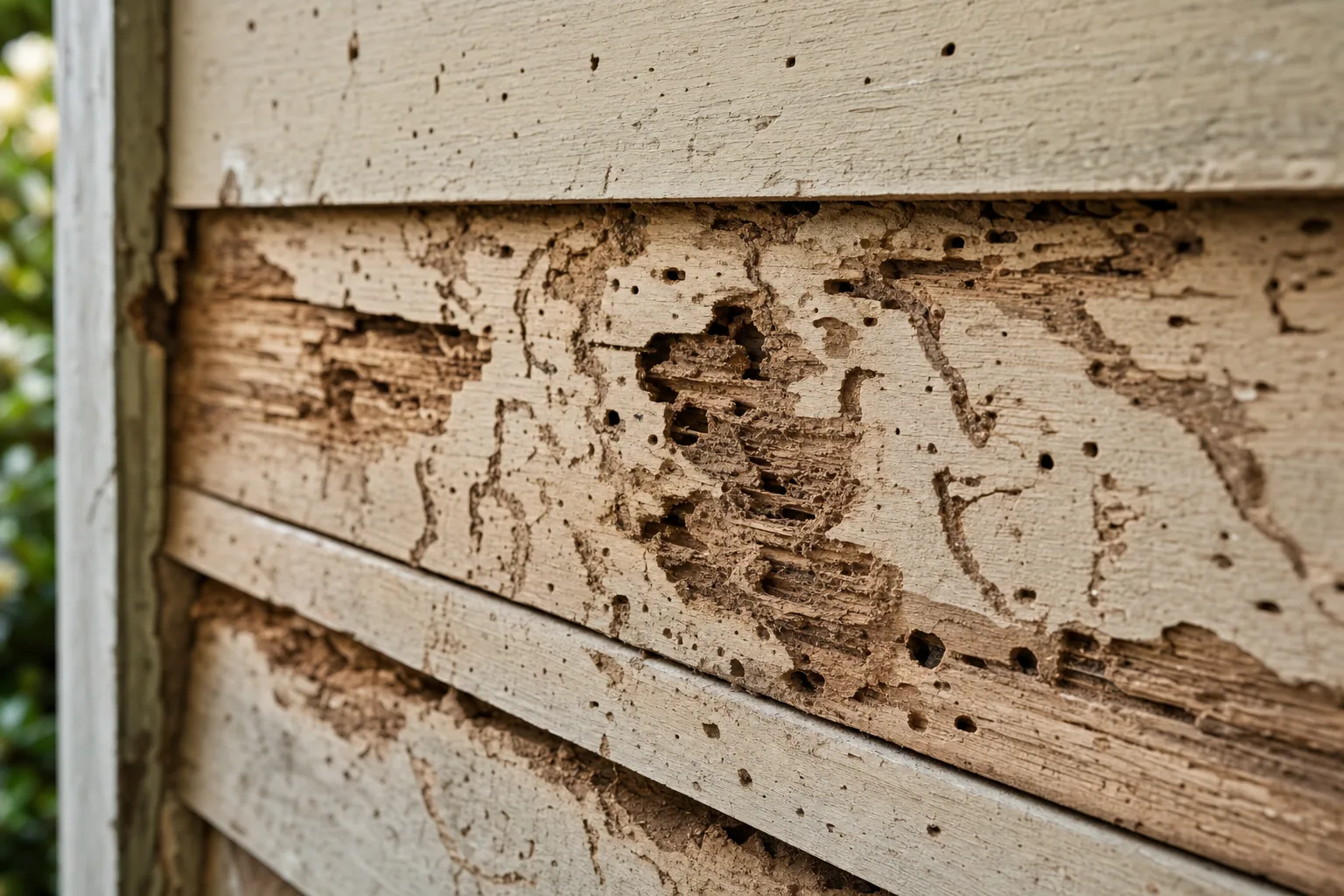
Your home's siding is its first line of defense against the weather, pests, and water damage. But termites and other wood-boring insects can compromise that protection silently, often causing extensive damage before you even realize there's a problem. If you have wood siding or any siding material with wood components, knowing the warning signs of termite damage is essential to catching an infestation early.
Why Termites Target Your Siding
Termites and wood-eating insects are attracted to siding because it offers easy access to cellulose, which is their primary food source. Your siding sits exposed to moisture from rain, humidity, and ground contact, creating the damp conditions these pests love. Once they establish a foothold in your exterior, they can tunnel deep into the wood framing behind the siding, potentially reaching your home's structural walls.
This is why pest infestation prevention through quality siding is so important. Trifecta Roofing and Restoration offers high-quality siding materials and installation that help avert pest infestations, promoting a healthier living space and protecting your home's structural integrity.
Visible Signs of Termite Damage
Termite damage often starts small but grows quickly if left untreated. Here are the most common visual indicators:
- Tiny holes or "pinholes" in the siding surface, about the size of a pencil tip
- Crumbling or soft wood that crumbles easily when you press on it
- Blistering or bubbling paint on wood siding panels
- Sagging or warped siding sections that seem to shift or separate from the home
- Visible tunnels or galleries inside the wood when you look closely
- Darkened or discolored patches on the siding
- Wood siding that sounds hollow when tapped
If you notice any of these signs, do not delay. Wood siding damage from insects can spread rapidly, and the damage behind the visible surface is often far worse than what you see on top.
Other Insects That Damage Siding
Termites are the most destructive, but they are not alone. Several other pests can compromise your siding:
Carpenter Ants: These large ants excavate galleries in wood for nesting. Unlike termites, they do not eat the wood, but their tunneling weakens it significantly. You may see sawdust-like debris near damaged areas.
Carpenter Bees: These solitary bees bore into soft wood to lay eggs. The holes are typically larger and more uniform than termite damage, and you may see bees hovering around the damaged spots.
Powder Post Beetles: These small beetles lay eggs in wood, and when the larvae hatch, they tunnel through the wood leaving behind a fine, talcum powder-like dust.
Wood Wasps: Less common but still damaging, these insects bore into siding to lay eggs, leaving visible exit holes.
How Moisture Amplifies the Problem
Moisture is the enemy of wood siding and the best friend of wood-eating insects. Rain, condensation, poor drainage, and standing water against your foundation all create an ideal environment for termites and other pests to thrive. Even small cracks or separation in your siding can allow water to penetrate behind the panels, creating hidden pockets of rot and decay that attract insects.
This is why Trifecta's siding solutions focus on preventing water damage and structural decay. Proper installation, sealed seams, and high-quality materials work together to keep moisture out and keep pests away. If you already have water damage or signs of rot, addressing it quickly prevents it from becoming a termite haven.
What to Do If You Spot Damage
If you suspect termite damage or wood siding damage from any insect, take these steps:
- Do not ignore it or hope it goes away. Insect damage spreads quickly.
- Avoid poking, prodding, or disturbing the damaged area, as this can spread the infestation further into your siding and framing.
- Document the damage with photos from multiple angles.
- Contact a trusted local contractor who can properly assess the extent of the problem.
- Get a professional inspection of the siding and framing behind it to understand the full scope of damage.
Many homeowners think they can seal small holes or paint over damage. This is a temporary fix at best and masks a growing problem. Professional repair or replacement addresses the infestation, removes damaged material, and prevents future issues.
Prevention and Long-Term Protection
The best approach is prevention. Here are practical steps to protect your siding:
- Keep gutters clean and ensure water flows away from your home's foundation
- Trim back trees and shrubs so they do not touch your siding
- Fix leaks immediately, whether from your roof, gutters, or foundation
- Maintain proper grading so water does not pool against your home
- Choose siding materials that resist moisture and pest damage
- Have your siding inspected annually by a professional
If you have wood siding, consider whether an upgrade to fiber cement, vinyl, or engineered wood might offer better long-term pest and moisture resistance. Trifecta Roofing and Restoration specializes in repairing, replacing, and fully remodeling siding systems with materials that perform in Tulsa's climate and resist the moisture and pest pressures your home faces.
When Professional Repair is Your Best Investment
Minor cosmetic damage might be patched, but structural damage always requires professional intervention. A licensed contractor will remove damaged siding, treat any active infestations, repair or replace the framing behind, and install new siding that protects your home going forward. This approach costs more upfront than ignoring the problem, but it prevents catastrophic structural failure and tens of thousands of dollars in water damage and frame replacement down the road.
Trifecta Roofing and Restoration combines expertise and experience with top-grade materials and proven techniques to handle siding repair and replacement properly. Our transparent communication means you will understand exactly what damage exists, why it needs to be repaired, and what the solution involves. We focus on preventing further damage and preserving your home's value, so you can have confidence that your siding investment will protect your home for years to come.
If you are seeing signs of termite damage or other insect damage to your siding, reach out to Trifecta for a free inspection. Early detection and professional repair can save your home from serious structural harm.