
Water damage is one of the most costly problems a homeowner can face. A single leak can quickly turn into structural decay, mold growth, and expensive repairs that compromise your home's safety and value. The good news is that most water damage is preventable with the right approach and regular maintenance.
At Trifecta Roofing and Restoration, we focus on keeping water out of your home before problems start. Our roofing services are designed to prevent leaks and water damage, safeguarding your home's interior. By taking proactive steps now, you can avoid the stress and expense of major water damage repair down the line.
Start with Your Roof
Your roof is your home's first line of defense against water. A compromised roof allows rain to seep into attics, walls, and ceilings, causing damage that spreads quickly.
Regular inspections are critical. Look for missing or damaged shingles, sagging areas, or visible wear. Age matters too: most asphalt shingles last 20-25 years. If your roof is approaching that age, water damage to home interiors becomes increasingly likely.
Key areas to watch include:
- Roof valleys where water naturally flows
- Flashing around chimneys, vents, and skylights
- Gutters and downspouts that channel water away
- Shingles that show cracks, curling, or algae growth
When you catch these issues early, repair costs stay manageable. Waiting until water starts leaking into your attic turns a minor fix into a major restoration project.
Maintain Your Gutters and Downspouts
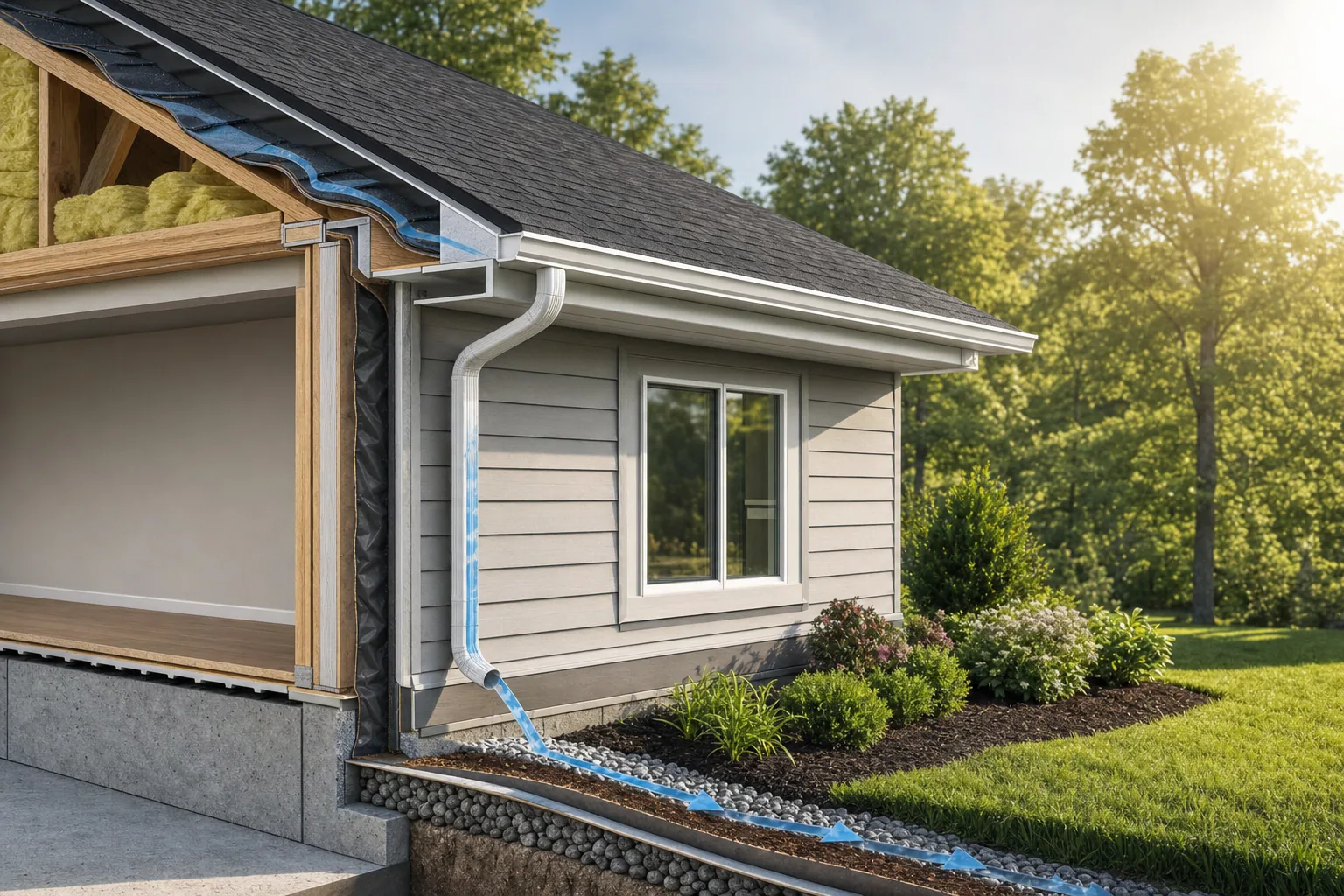
Gutters do one critical job: move water away from your foundation and walls. When they fail, water pools against your home's perimeter and seeps into basements and crawl spaces.
Clean your gutters at least twice a year, especially after storms. Debris like leaves and branches block water flow, causing it to back up and overflow. Standing water in gutters also becomes heavy, pulling gutters away from the roofline and creating gaps where water enters.
Downspouts should extend at least 4 to 6 feet away from your foundation. If they dump water close to your home, that water will find its way into basement walls and footings.
Seal and Maintain Your Siding
Damaged or deteriorating siding exposes the wood framing underneath to moisture. Over time, this leads to structural decay that weakens your home and creates entry points for pests.
Our siding solutions halt structural decay by creating a protective barrier. We work with vinyl, steel, aluminum, wood, and engineered wood siding. Whether your siding shows cracks, gaps, or water stains, addressing it quickly prevents water from reaching the structural components beneath.
Look for these warning signs:
- Cracks or splits in siding panels
- Gaps between siding and trim
- Peeling paint or discoloration
- Soft or spongy wood when you press it
- Visible mold or mildew
Small repairs done early stop small problems from becoming expensive ones. A few cracked panels caught now cost far less than replacing siding and repairing rotted framing later.
Address Storm Damage Immediately
Severe weather like hail and wind can compromise your roof and siding in ways that aren't immediately obvious. Torn shingles, bent flashing, and cracked siding might not leak right away, but they create vulnerabilities that water exploits over time.
After a major storm, have a professional inspect your roof and exterior. Trifecta Roofing and Restoration work with most insurance claims to make the process seamless and cost-effective. We help you understand what damage is covered and get the repairs done before hidden leaks turn into expensive water damage.
Keep Flashings in Good Repair
Flashing is the thin metal installed where your roof meets chimneys, vent pipes, skylights, and walls. When flashing fails, water seeps into walls and attics behind the scenes.
Flashing problems often develop when:
- Sealant cracks and deteriorates
- Fasteners rust or come loose
- Flashing separates from the roof or wall
- Debris accumulates around the flashing
These areas require annual inspection, especially before winter. If you notice water stains on ceilings or walls near chimneys or vents, have flashing checked immediately.
Control Interior Moisture
Water damage doesn't always come from outside. High indoor humidity can lead to condensation, mold growth, and damage to insulation and framing.
Keep humidity levels between 30 and 50 percent. Use exhaust fans in bathrooms and kitchens to vent moisture outside. Make sure your attic has adequate ventilation to prevent warm, moist air from becoming trapped. Proper insulation and ventilation work together to keep moisture in check.
Know When to Call a Professional
Some water damage prevention tasks are DIY-friendly, like cleaning gutters or inspecting visible roofing damage. But anything involving climbing on the roof, sealing flashing, or replacing siding should go to experienced contractors.
When you work with Trifecta Roofing and Restoration, you get expertise, quality materials, and transparent communication throughout the project. We know Tulsa's climate and the specific challenges homes in this area face. Our unwavering commitment to quality means we use top-grade materials and proven techniques to deliver results that stand the test of time.
Take Action Today
Water damage prevention starts with awareness and regular maintenance. Know the condition of your roof, siding, gutters, and flashing. Act quickly when you spot problems. And work with contractors who understand your home's needs and won't cut corners.
If you're concerned about your roof or siding, or if you've recently experienced storm damage, reach out to Trifecta Roofing and Restoration for a free inspection. We'll give you an honest assessment of your home's current condition and recommend the right steps to prevent costly water damage. Call (918) 471-2777 or request an estimate online to get started.