

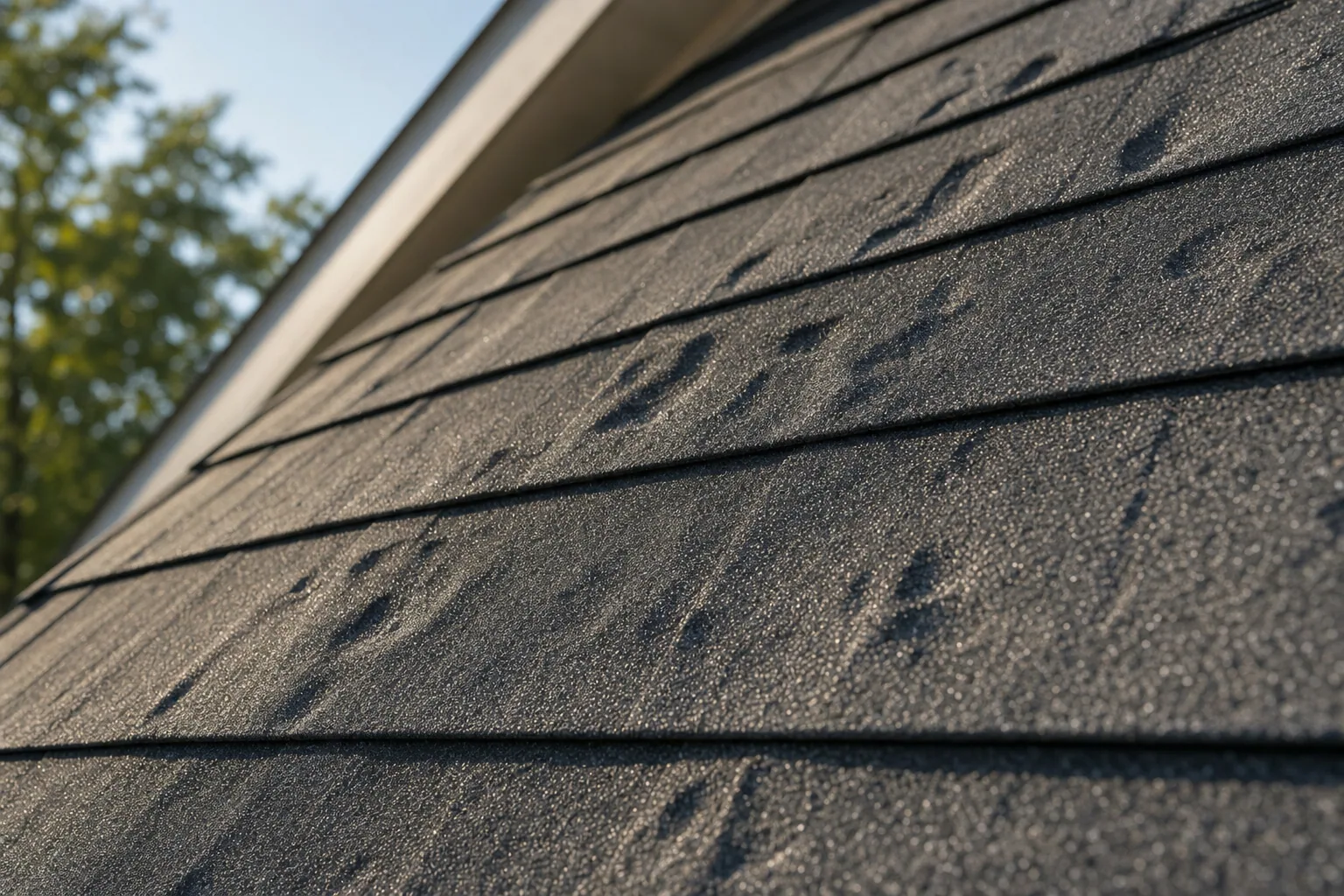
Hail storms can strike Tulsa quickly and leave damage that isn't always obvious at first glance. Your roof takes the brunt of the impact, and hail damage to roof shingles can create vulnerabilities that lead to leaks, water damage, and costly repairs down the road. The challenge is that many homeowners don't realize they have a problem until water starts appearing inside their home or their insurance company mentions it during a claim.
Spotting hail damage early gives you the chance to file an insurance claim while the damage is fresh and documented. It also prevents small issues from becoming major structural problems. This guide will help you understand what hail damage looks like, where to look, and what to do next.
What Hail Damage Actually Looks Like
Hail doesn't always leave dramatic, visible holes in your roof. In fact, most hail damage is subtle at first. When hail strikes asphalt shingles, it typically creates:
- Soft spots or indentations in the shingle surface
- Loss of granules (the rough, sand-like coating on shingles)
- Bruising or discoloration on the shingle face
- Small cracks around the impact areas
- Dents in metal flashing, gutters, or vents
The size of the hail and the angle of impact determine how visible the damage is. Golf ball-sized hail will cause more noticeable damage than pea-sized hail. Similarly, shingles that take a direct hit show more obvious signs than those grazed by hail.
One thing to understand: hail damage on your roof doesn't always mean you'll see water leaking into your home immediately. The damage weakens the protective layer of your shingles, making them more vulnerable to wind and weather. Over time, or during the next heavy rain, water finds its way through those weak spots.
Where Hail Damage Tends to Concentrate
Hail doesn't strike your roof evenly. Certain areas are more likely to show damage:
- The side of your roof facing the direction the storm came from
- The roof peak and upper edges, which face the most exposure
- Areas around vents, chimneys, and skylights where hail can collect and concentrate impact
- Metal fixtures like gutters, downspouts, and flashing
- Exposed wood trim and fascia boards
If you're doing an initial check from the ground, start by looking at these zones. They'll often show damage before less-exposed areas do.
How to Safely Inspect Your Roof
Before climbing onto your roof, remember that stepping on hail-damaged shingles can cause additional damage and create safety hazards. Many shingles become brittle after hail impact.
For a ground-level inspection:
- Use binoculars to examine visible sections of your roof from the ground
- Look for discolored patches, missing granules (which may appear as darker streaks in gutters), or visible dents
- Check your gutters and downspouts for granule buildup, which indicates shingle damage
- Walk around your entire home and photograph any areas that look suspicious
If you do decide to go onto your roof, wear proper safety equipment and move slowly. Better yet, leave roof inspections to professionals. Trifecta Roofing and Restoration can perform a thorough inspection and document any damage for your insurance claim.
Signs of Hidden or Developing Damage
Sometimes hail damage doesn't show up right away. Water may be working its way through compromised shingles before you see stains on your ceiling. Watch for these warning signs:
- Darker patches on your attic insulation
- Soft spots in your drywall or ceiling
- Water stains that appear after rain, even minor rain
- Peeling paint on interior walls
- Musty odors in your attic or upper floors
If you notice any of these, you likely have a roof leak that needs immediate attention. Check out our guide on signs of hidden storm damage to learn more about what to look for inside your home.
Document Everything for Your Insurance Claim
If you suspect hail damage, documentation is critical. Take clear, dated photos and videos of any damage you can see safely access. Include wide shots showing the overall roof condition and close-ups of specific impact areas.
Note the date of the storm and any weather reports that mention hail size. Insurance companies want evidence that connects the damage to the recent weather event. Photos taken from multiple angles help establish the scope of damage.
Don't make permanent repairs before your insurance adjuster inspects the damage, as this can complicate your claim. Trifecta Roofing and Restoration works directly with insurance companies to make the claims process seamless. We handle the inspection, documentation, and coordination so you don't have to navigate it alone.
What to Do If You Find Hail Damage
Once you've spotted potential hail damage, take these steps:
- Contact your insurance company and file a claim as soon as possible
- Ask if they'll send an adjuster to inspect the roof
- Call a trusted local roofing contractor to provide an independent assessment
- Get written quotes for repairs before authorizing any work
- Review your coverage limits and deductible
Timing matters. Many insurance policies have time limits for filing damage claims. Don't wait weeks or months to report hail damage. The sooner you report it and get professionals involved, the smoother the process goes.
At Trifecta Roofing and Restoration, we understand Tulsa's severe weather patterns and the insurance claim process. Our team documents damage thoroughly, communicates clearly with your insurance company, and delivers repairs that restore your roof to like-new condition. We focus on preventing water damage and protecting your home's structural integrity.
Taking Action Protects Your Home
Hail damage to your roof is not something to ignore. Even small dents and granule loss can lead to leaks that cause mold, water damage, and expensive interior repairs. By spotting damage early and taking quick action, you protect your investment and avoid larger problems down the road.
If a hail storm has passed through your area, or if you notice any of the signs mentioned in this article, reach out today. Trifecta Roofing and Restoration provides free inspections and works with your insurance to make repairs affordable and stress-free. Contact us at (918) 471-2777 or request a free estimate online.