

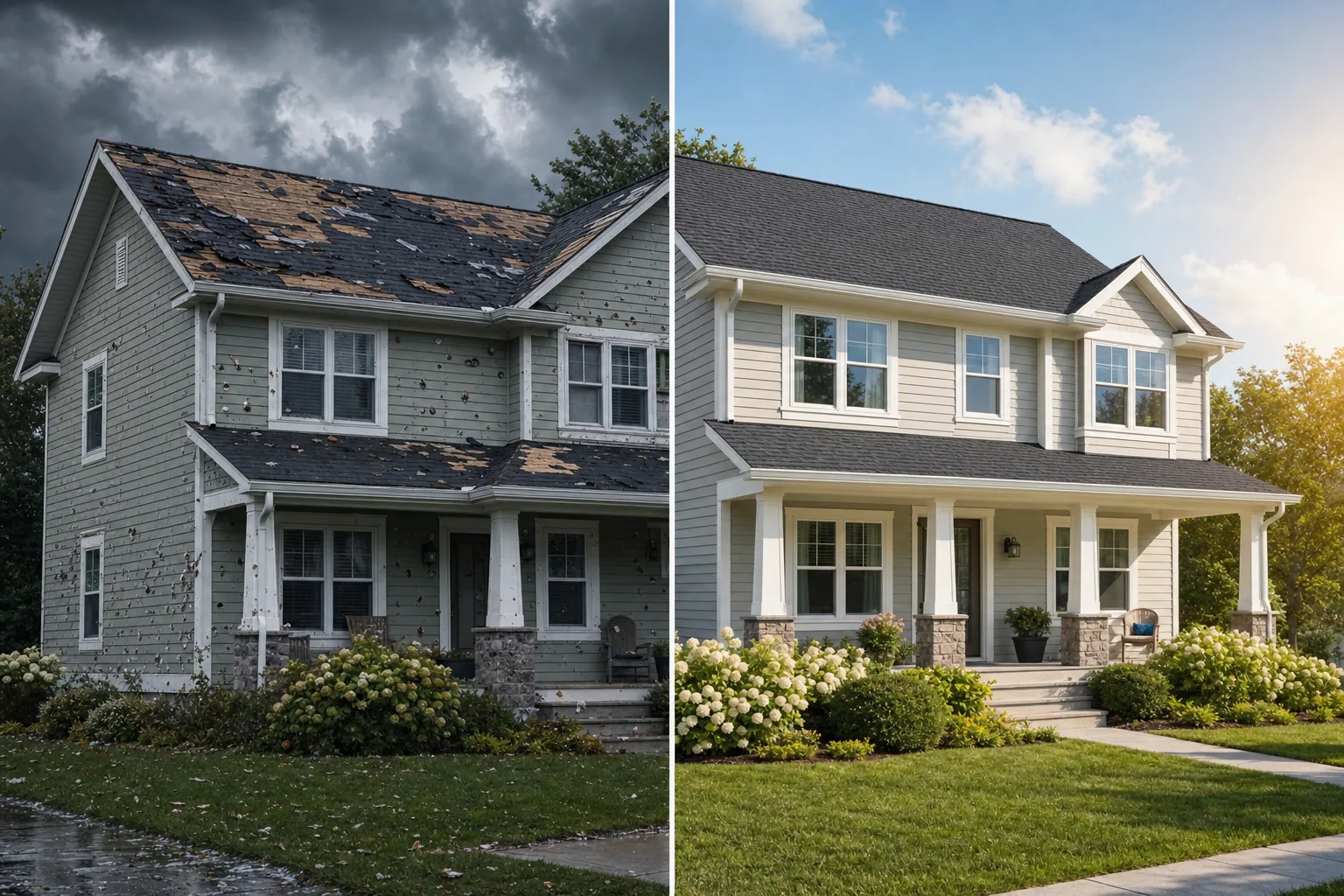
When severe weather strikes Tulsa, the damage to your roof and siding can feel overwhelming. Beyond the immediate visible destruction, you're likely wondering how this affects your insurance policy, whether your claim will be approved, and what happens next. Understanding the relationship between storm damage and your insurance coverage is the first step toward getting your home restored quickly and fairly.
Storm Damage and Your Insurance Coverage
Most homeowners insurance policies cover sudden, accidental damage caused by storms, including wind and hail damage. However, coverage depends on several factors: your specific policy, your deductible, the age of your roof, and whether the damage is deemed "covered" by your insurer.
When wind or hail damages your roof or siding, your insurance company views this as a sudden event, not gradual wear and tear. This distinction matters because gradual damage is typically not covered. A violent hailstorm that dents multiple roof shingles in a matter of minutes, for example, is covered. But a roof that has slowly deteriorated over years of weather exposure usually is not.
Your policy also specifies a deductible, the amount you pay out of pocket before insurance kicks in. After a major storm, if repair costs exceed your deductible, insurance generally covers the rest up to your policy limits.
Why Insurance Companies Investigate Storm Damage
After you file a claim, your insurance company sends an adjuster to inspect the damage. Their job is to determine whether the damage is storm-related, assess the scope of repairs needed, and estimate the cost.
This investigation is important because it protects both you and the insurer. A thorough inspection ensures:
- Damage is actually from the recent storm, not pre-existing conditions
- Repair estimates are realistic and based on industry standards
- Your claim qualifies for full coverage under your policy
Many homeowners worry that adjusters will deny their claims or undervalue the damage. This happens sometimes, but working with an experienced contractor who understands insurance claims can help. Contractors like Trifecta Roofing and Restoration work directly with insurance companies and can provide professional assessments that support your claim and ensure you receive fair reimbursement.
How Deductibles Affect What You Recover
Your deductible is a critical factor in what you actually receive from your insurance claim. If your deductible is $1,000 and your repair bill is $5,000, insurance pays $4,000 after you cover the $1,000 out of pocket.
After a major storm event, deductibles can feel steep. Some homeowners discover too late that they chose a high deductible to lower their premiums. If a storm causes widespread damage in your area, hundreds of claims flood in, and insurers may take months to process them all.
This is where having a trusted local contractor matters. When you work with someone who has experience navigating insurance claims, they can help you understand exactly what your policy covers, what your deductible means, and what the next steps look like. They can also help expedite the process by providing detailed damage documentation and repair estimates that insurers recognize.
The Impact of Delayed Repairs on Your Coverage
One often-overlooked aspect of storm damage and insurance is the timing of repairs. If you delay fixing storm damage, additional damage can occur. Water leaks from a damaged roof can lead to mold growth, rotting wood, and interior water damage. These secondary issues may not be covered if the original damage was covered but you failed to act on repairs promptly.
Insurance companies expect homeowners to take reasonable steps to prevent further damage after a storm. If you delay repairs and your home suffers additional water damage, your insurer may deny the secondary damage claim or reduce your payout.
This is why getting a free inspection after a storm is so important. Even if you don't see obvious damage, hidden storm damage like small shingle cracks or loose flashing can lead to expensive leaks months later. A professional inspection catches these issues early and protects both your home and your insurance claim.
Insurance and Roof Age: A Key Factor
Insurance companies often scrutinize roof age when processing claims. Many policies limit coverage or deny claims for roofs older than 20 or 25 years, depending on the insurer and your state.
If your roof is aging and experiences storm damage, your insurance company may offer a partial payment based on depreciation rather than full replacement cost. This means you receive less than the full cost of a new roof.
Understanding your roof's age and your policy's stance on aging roofs helps you prepare. If your roof is 15 to 20 years old and a storm is approaching, getting a professional assessment beforehand can help clarify what your insurance will cover. Some homeowners discover their insurance will only pay a fraction of replacement costs, prompting them to upgrade their policy before the next major weather event.
Working with Your Insurer and a Contractor
The claims process moves more smoothly when you have support. Trifecta Roofing and Restoration works with most insurance claims to make the process seamless and cost-effective for homeowners. Here's how partnering with an experienced contractor helps:
- Professional damage documentation that insurers trust
- Detailed repair estimates aligned with industry standards
- Clear communication between you, the contractor, and the insurance company
- Faster claim processing because all paperwork is thorough and accurate
Some homeowners try to navigate the claim alone, but insurers respond more favorably to professional assessments. When an adjuster sees a repair estimate from a licensed contractor with years of experience and a strong reputation, they're more likely to approve the claim at a fair rate.
What Happens If Your Claim Is Denied
Occasionally, insurers deny storm damage claims or offer settlements that seem too low. Common reasons include:
- The damage is deemed pre-existing or gradual, not storm-related
- The policyholder failed to maintain the roof or siding
- The damage falls outside the policy's coverage limits
- The claim was filed too late
If your claim is denied, you have options. You can request a detailed explanation, have your own contractor inspect the damage, and appeal the decision. Many homeowners find that having a contractor's professional assessment and explanation helps overturn a denial or increase a low settlement offer.
The key is acting quickly and getting professional help early. Waiting weeks or months to file a claim or delaying repairs weakens your position.
Protecting Your Home and Your Insurance Coverage
After a storm, your insurance coverage is only as good as your next steps. Document all damage with photos, file your claim promptly, and arrange repairs with a contractor who understands the insurance process.
Trifecta Roofing and Restoration has helped dozens of Tulsa homeowners navigate storm damage claims, manage repairs, and restore their homes to full safety and beauty. With transparent communication at every stage and expertise in insurance claims, we make the process less stressful.
If severe weather has struck your home, don't wait. Contact Trifecta today for a free inspection and honest assessment of your storm damage. We'll help you understand your insurance coverage, support your claim, and get your roof and siding repaired right.